Morels for dinner.
Morels for dinner.
Maris Kreizman on AI pressures building in the publishing industry, particularly how it impacts writers and editors: “It’s not an ideal environment for productivity, let alone for making art.”
A nostalgic read on how music nerdery bloomed online.
More on user-generated content marketing and how it works. UGC is a powerful example of “social proof,” where people’s parasocial tendencies are leveraged to boost brand credibility and conversions. This is the consumer psychology behind celebrity and influencer sales and endorsements.
Watching the fallout: Fans discovered that the band Geese benefitted from a hefty marketing campaign. Folks are debating whether this makes Geese a “psy-op” or merely “sell-outs”, to use an old term of art. Meanwhile the marketing firm behind the push is getting a ton of attention in its own right.
I’m following a guy in TX who is using AI to write and illustrate children’s books whole cloth, then self-publishes using Amazon, and getting recognition in his region as a laudable children’s author. The books are categorically not good. It’s like people are rewarding his content strategy.
Tom’s Hardware on Mythos and marketing hype. Additional commentary from Michael Corn, asking whether Mythos coverage reinforces or establishes perceptions about cybersecurity.
Garbage Day on what makes something cool to Gen Z, and how this is impacted by the degradation of “pillars of coolness” in previous generations like culture rags and MTV. GD predicts that “cool” will be measured by lack of polish and “how many human beings left their house to experience it.”
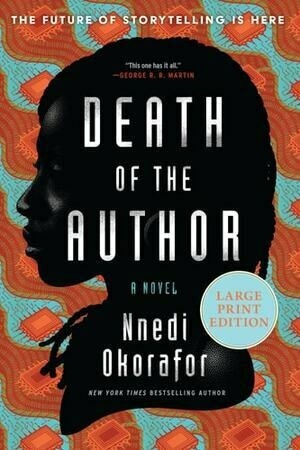
Finished reading: Death of the Author by Nnedi Okorafor 📚
What the internet was made for: A Chicago music fan secretly recorded over 10,000 live concerts from Nirvana to Sonic Youth to Spoon, and has made them all available online.
Taste the Music is a new audio series exploring why artists are driven to create. The first episode features storytelling and songwriting by friend of the blog Whitney Mann, where she chronicles her experience getting “the yips” onstage, and how she worked through it and picked up her guitar again.
I once worked in a role where I keyed million dollar manufacturing orders into SAP, information that directly fed into factory specs for a manufacturing facility based in another country. Our regional office fed into a massive, global electrical engineering firm that ran on small margins (electricity delivery is a well-trod market), so our ability to deliver accurate orders on time was a differentiator in a field that is otherwise easily interrupted by chip shortages and logistics chains.
It was a big job. I learned a ton about electrical engineering, manufacturing and global logistics from a particular vantage point in North America. Our headquarters were based in Sweden, with locations around the world to support the electrical grid(s), covering both hardware and software solutions. My colleagues and I worked in positions that sat somewhere between B2B customer service, inside sales and data entry, and were expected to maintain a 99.8% accuracy rate because a single fat finger error would cascade across myriad systems, impacting real-world operations to the tune of hundreds of thousands of dollars per error.
Once (and only once), I fat-fingered a serial number during data entry which ruined an entire shipment of widgets. In response, the factory in Mexico sent the incorrect order of widgets, about five pallets, to my location in the United States so I could correct the order by hand. One by one, I had to physically remove each widget from a pallet, then from its individual shipping container, make a correction on the widget itself, and repackage each one, signing my name on each unit to ensure it was corrected by an accountable employee. I can’t recall why the issue couldn’t have been corrected on the factory floor, but it wasn’t on the menu. It was going to stay my problem.
This was the one and only factory error I made in about five years of tenure, precisely because it was so painful to correct it. The process was a little embarrassing but nobody made it especially so. Instead my coworkers up and down the org chart relayed a simple expectation: the desk workers need to pay attention to the details because the alternative is too costly. A few old-timers made sure to razz me about it in good humor, but ultimately the error was mine and the fix was mine, and the experience stuck because the whole chain of responsibility understood the stakes and reinforced the consequences. They also trusted me to stick around and continue to do my best.
During my annual review that year, I was dinged for only having a 98% accuracy rate, and I knew why that was a fair assessment.
I thought about this when I read today’s NYT piece on whether 90% accuracy is good enough for LLMs.
Related-ish: The important legacy of the Sarbanes-Oxley Act.
Amid renewed calls for the death of feminism, or of millennial feminism or whatever (TERF alert), I found this old victory lap from the era where it looked like new media had permanently paved the way for a newer, fresher publishing industry. It also tips the hat to Jezebel’s place in the fray, “the first online women’s publication to successfully combine feminist writing with a for-profit motive.”
Poell argues AI is entangled with platform capitalism through shared infrastructure, reinforcing concentration of the market. The hype obscures local realities of adoption, putting public alternatives in the position of proving their existence alongside advocating for their place in the market.
I’m collecting mentions of the old blog while they still exist bc lot about this cohort is hagiography written well after the fact. I don’t think I saw it way back when, from the first time I “quit blogging” in 2006 by Rebecca Traister. As ever, a big part of social media is quitting social media.
Pulling from some old communication theory while I am thinking about blogging and the indie web, and especially thinking about Dallas Smythe, who argues that mass media doesn’t produce content but audiences, packaged and sold to advertisers. On social media, users aren’t just the audience being sold, they’re also a labor force co-producing the content that attracts more audience.
Looking back at the feminist blogging era with the benefit of my current experience, I’d argue that what made Feministe different from our peer blogs was the commitment to convening the audience and sharing the platform without packaging it up for or selling to advertisers. That was largely my boundary – with as much market space as it commanded for the time, it was never monetized at scale, though individual contributors were free to use it as they wanted to build their audiences. We eventually committed to a small advertising carousel to cover hosting costs.
I recall someone balking at me for refusing to broadly monetize when I spoke at Blogher in 2005, but it was a hard line, for better or worse.
While poking around for some examples of media coverage of the early blogosphere, I found this mention from the time Lisa Jervis of Bitch Magazine did a guest stint at Feministe. For context, Feministe hosted regular guest blogging seasons where we opened our comparatively gigantic platform to much smaller bloggers. What we didn’t pay in money, we could offer in audience and attention, with mixed results. Several people who guest blogged found the audience and attention experience terrible – which began its own media cycle.
The reality is that having a platform on Al Gore’s unregulated internet means you face a lot of gross commentary from in and outside the proverbial house. Invitations for guest blogging were happily accepted, but the attention wasn’t reliably durable for writers and their goals. This reflection in Salon, “In Defense of Ladyblogs,” recaps what it’s like to have a massive platform on the open internet: “For every commenter who thoughtfully critiqued my message, there would be one who’d say I was a tool of the patriarchy, and another who’d accuse me of abusing my class privilege. It’s a vibrant, razor-sharp community and I was honored to be a part of it, but my point is, if explicitly feminist blogs are the only acceptable online outlet for feminists to inhabit, we’d get exhausted mighty quickly.” This is a limited telling, but there are some nuggets here that forecast the commentary around Lindy West’s book – particularly around the pressures of being smart in public while also being a person who wants to be liked and included.
Seeing a lot of discussion about trade-offs related to vibe-coding.
Angst about data center development continues to grow in the Rust Belt.