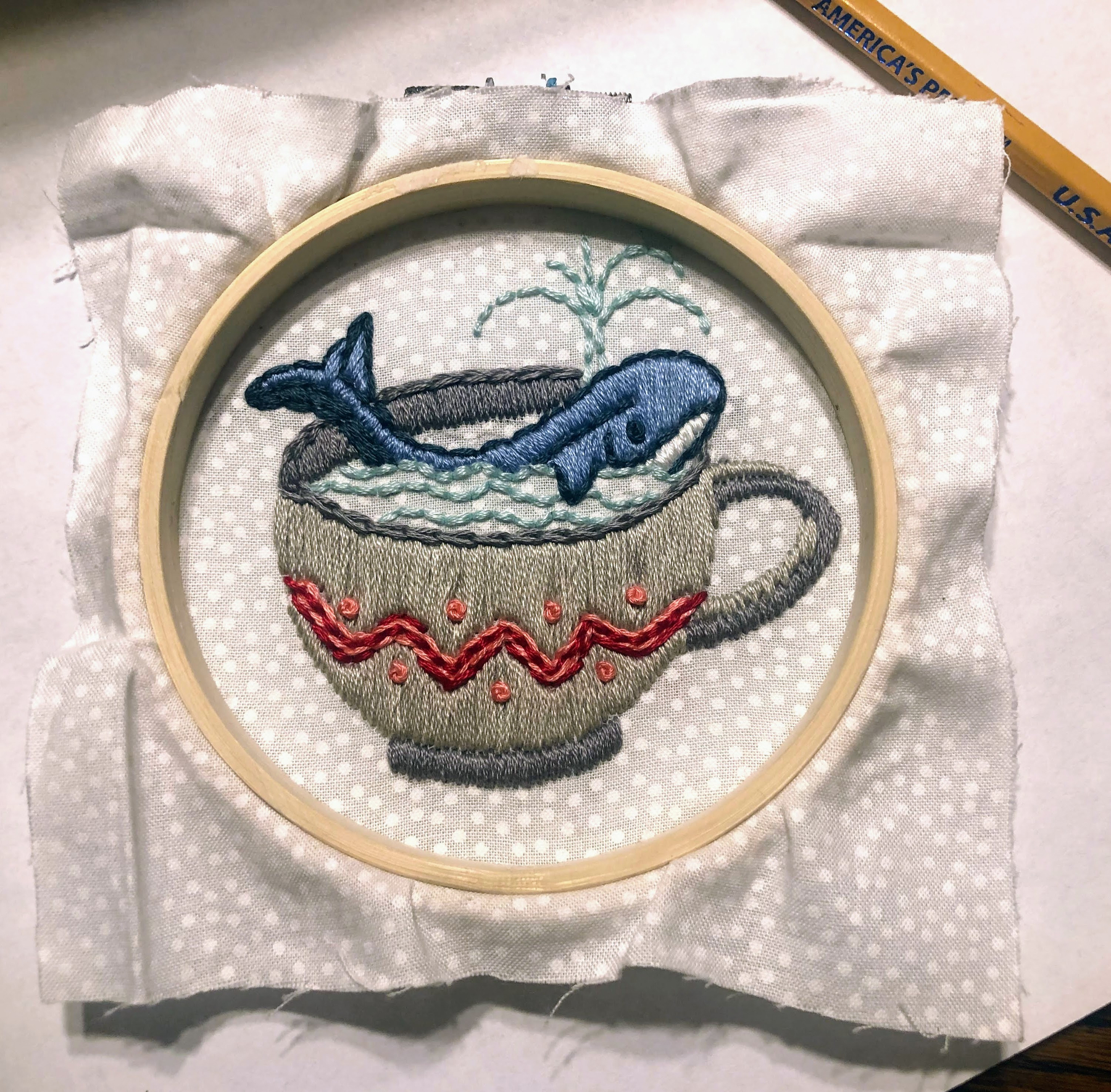
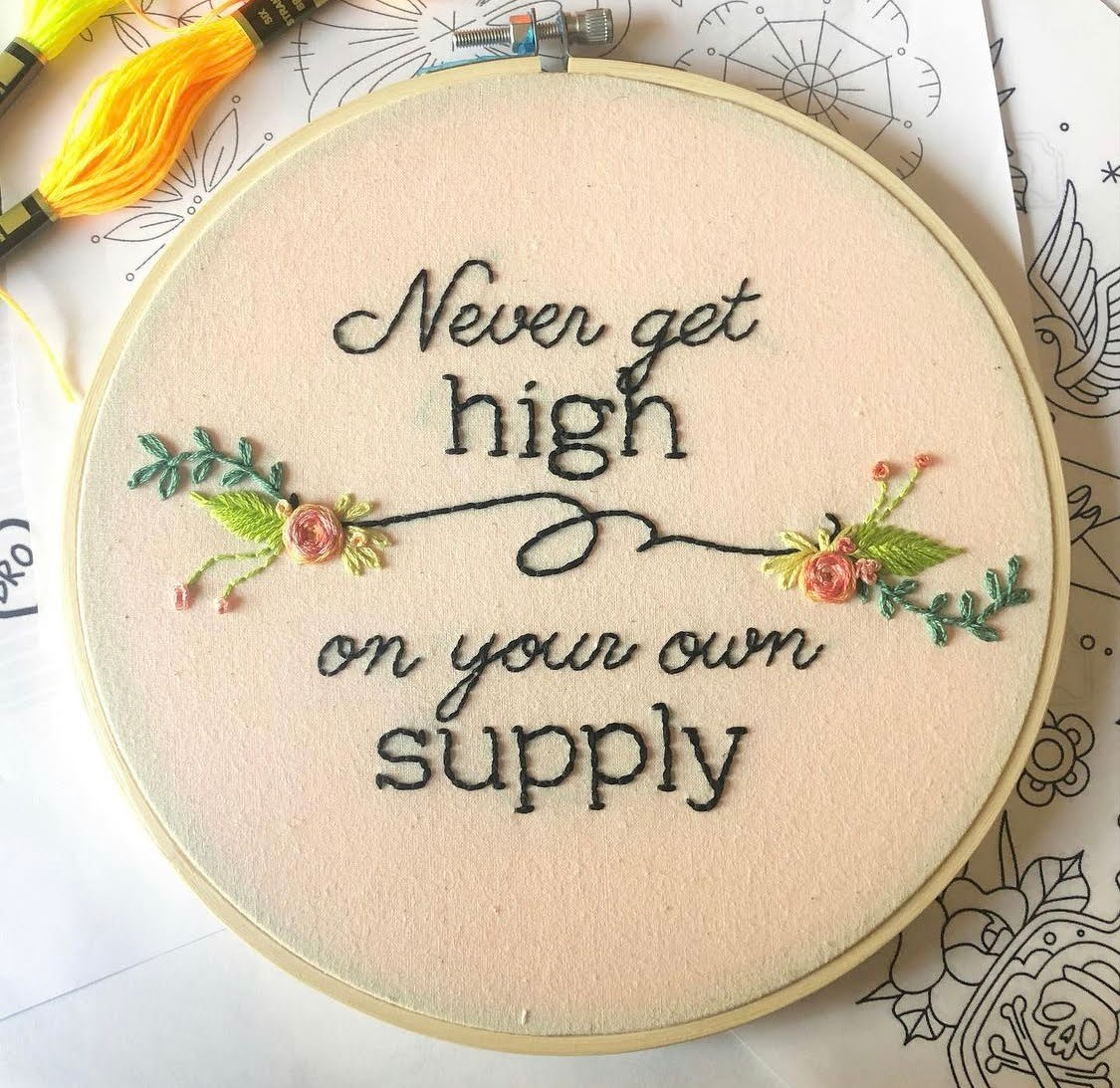
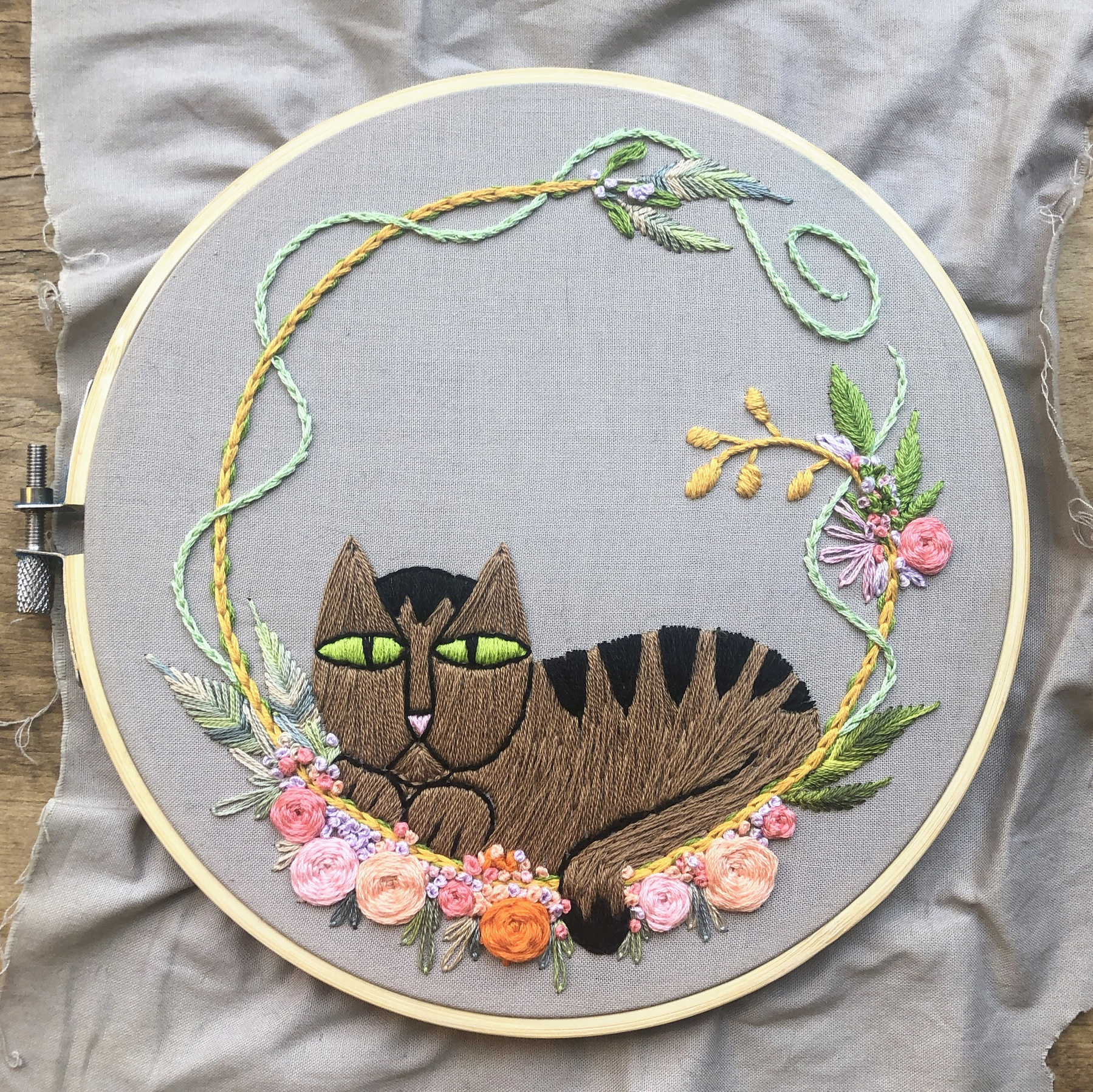
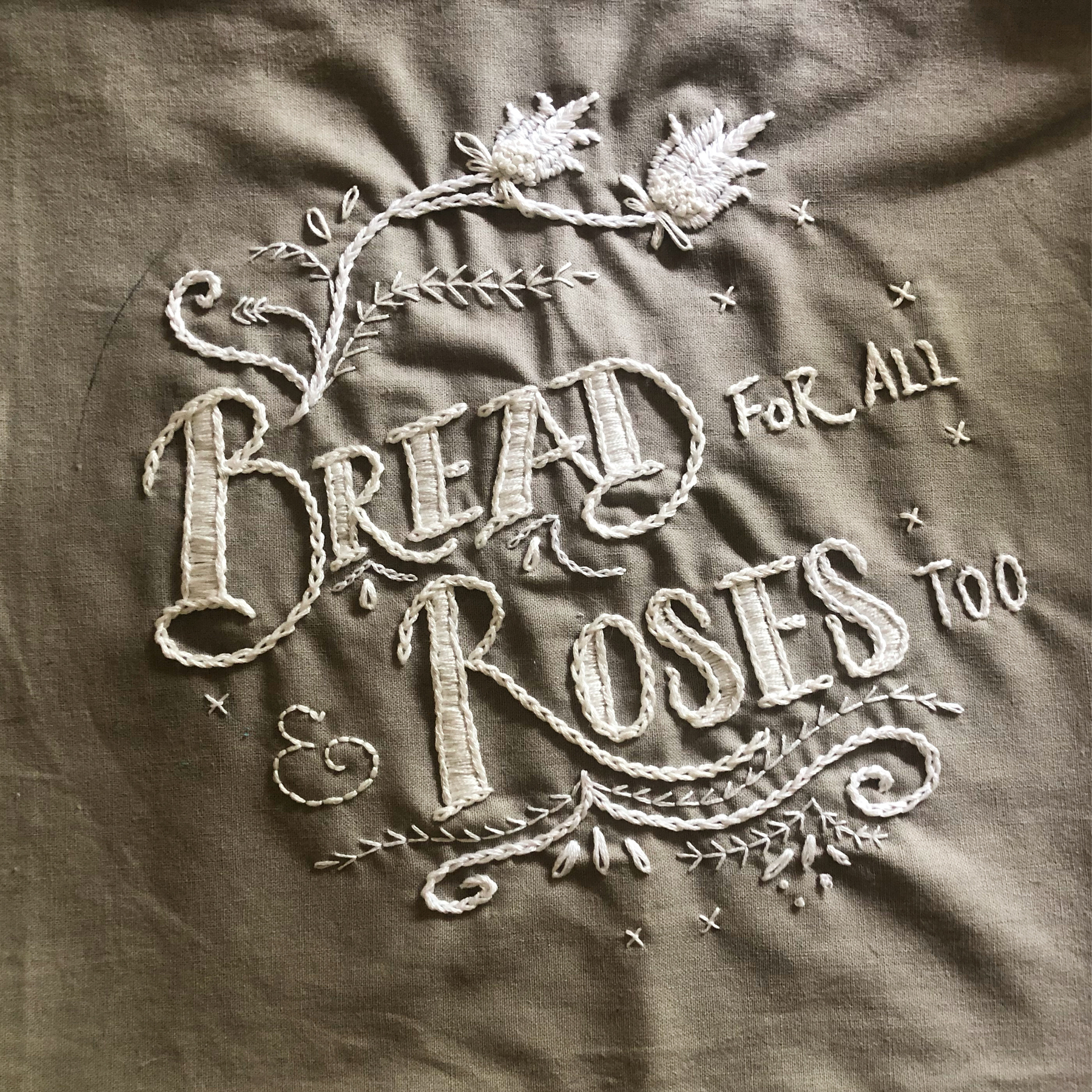
While I’ve been a knitter for many years, I picked up a mess of other crafts in the aughts. I was influenced first by some incredible Instagram embroiderers. Then I took a virtual quilting class in 2020 that set me off in new directions after I learned about Rosie Lee Tompkins and couldn’t stop thinking about her work. During the stay-at-home era I indulged and picked up crochet on the side. I also took a beat from a good friend and muse — a dental tech and glass artist who adapted her rotary dental tools to engrave recycled glass — and picked up a little glass engraving. That’s a lot, but.
Tinkering is fun. I love learning a new process because it’s good for the brain, especially one that’s often trained on screens. It gets me off of those screens, and is another way to find creativity in my day in small but meaningful, measurable ways. Also, as I pick up a new hobby, I learn more and gain more confidence in those other areas.
I probably won’t share much about my family or personal life in this space, but since we’re talking about trust on an increasingly risky internet, here’s a peek at what I’m into offline:
With the chill in the air, I pulled out the yarn stash and have been crocheting like mad. I usually like to crank out hats while I settle down in the evenings, but over the last couple of years I’ve been looking across my array of fabrics and yarn supplies and deciding to wing some new ideas, especially wearables. Laerke Bagger is my current muse for how she thinks about using scraps and showing imperfections, and her books are gorgeous. I also spent several years volunteering at this artist coop that gave me lots of ideas to explore at home.
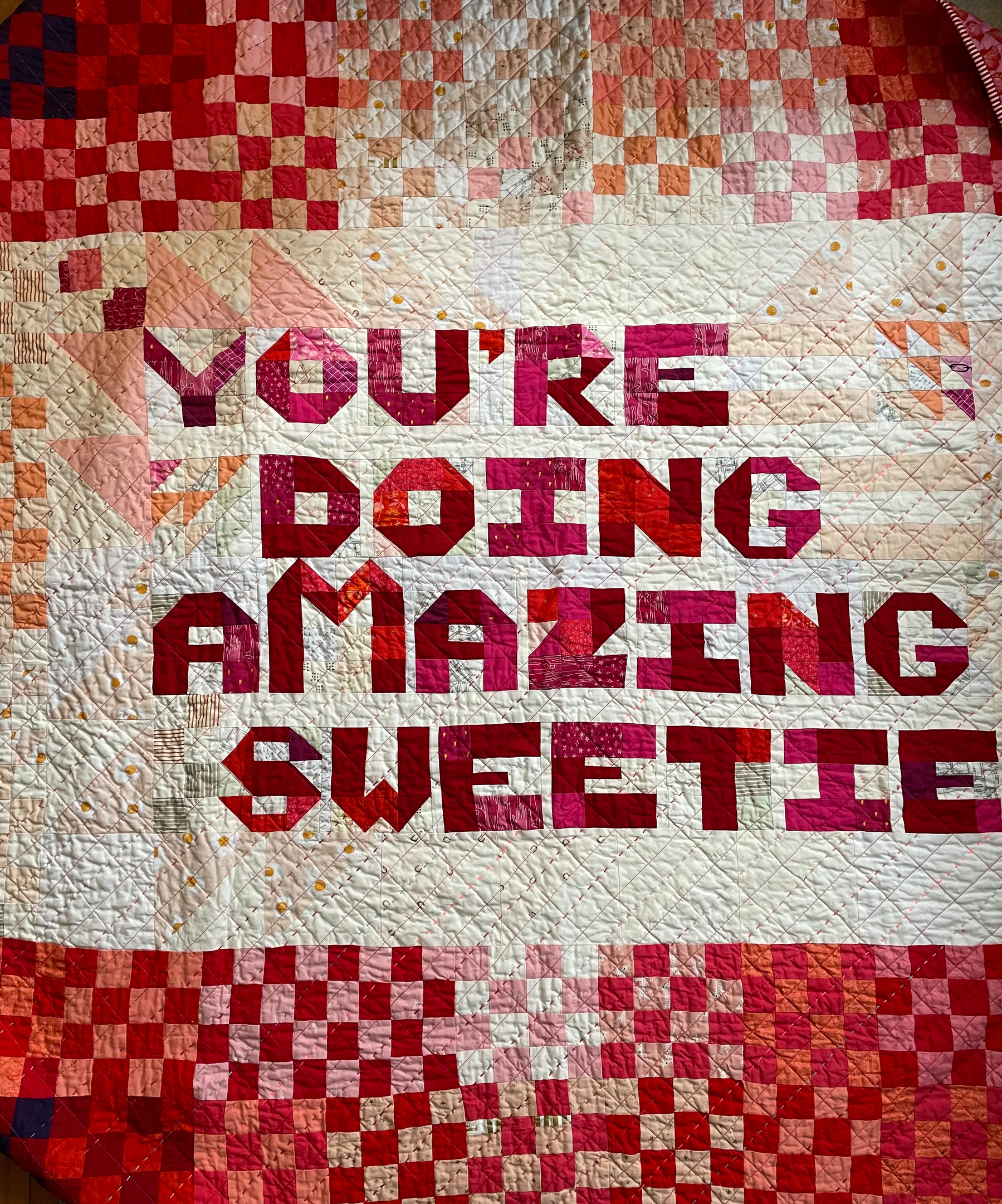
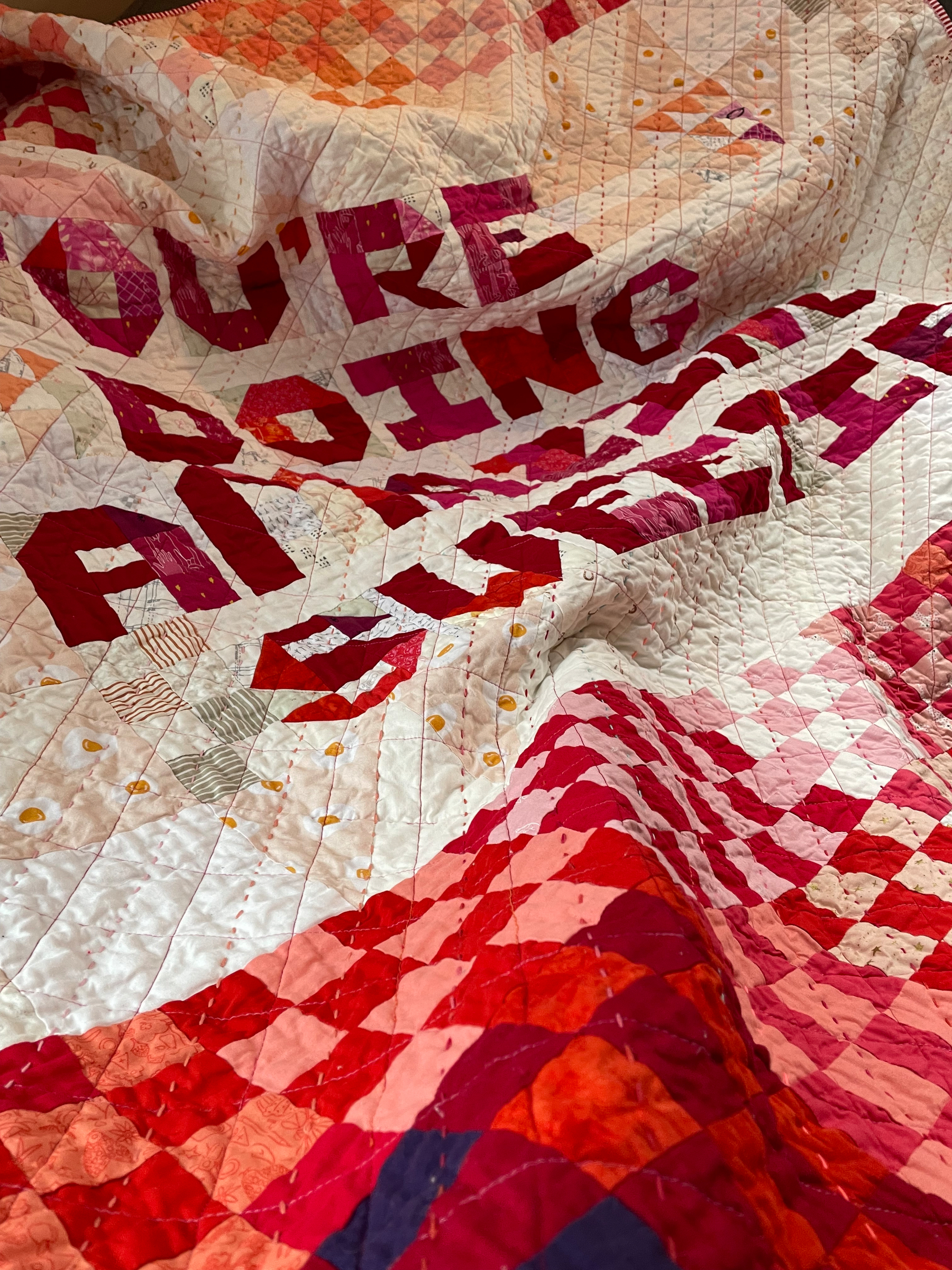
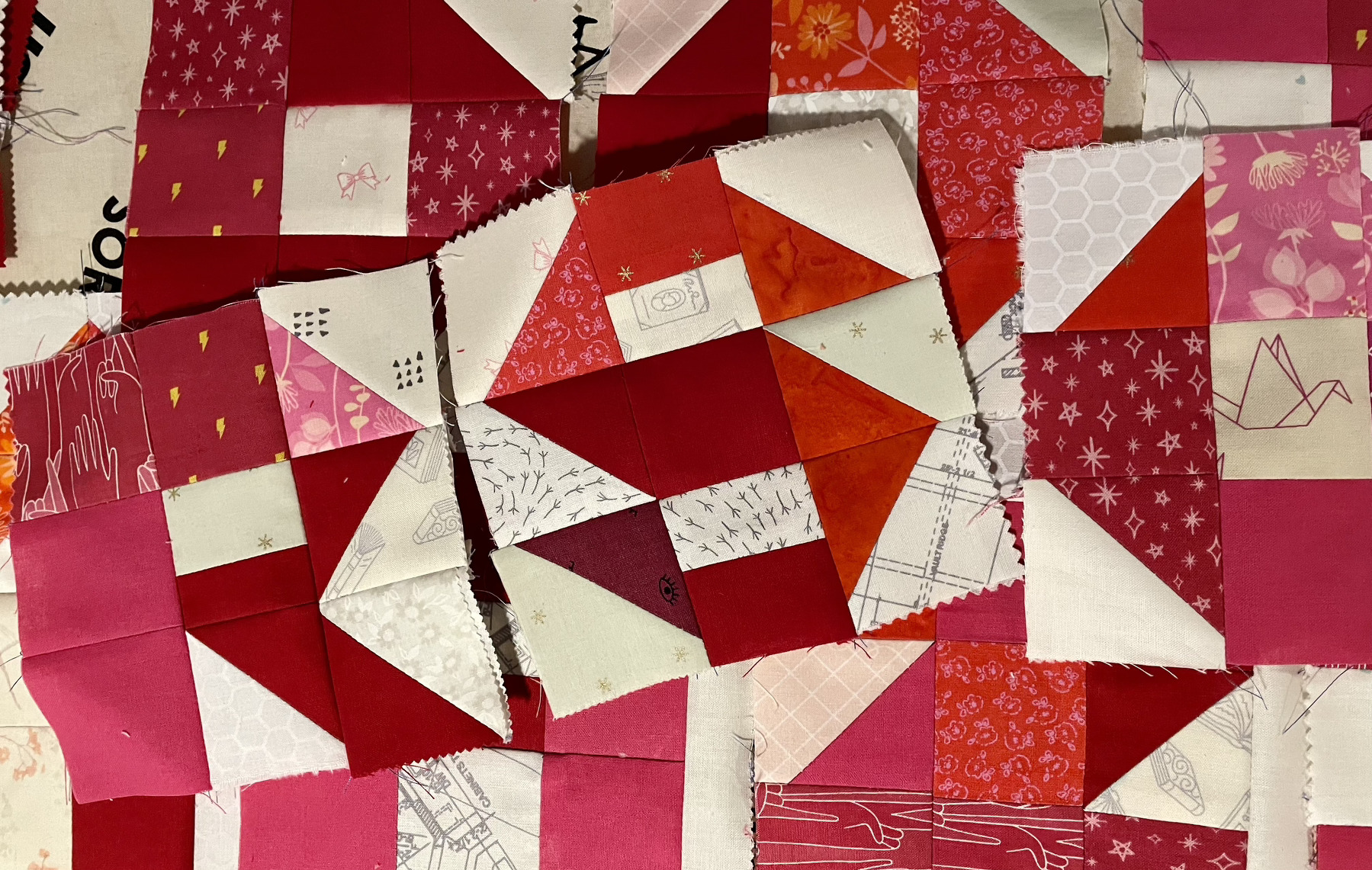
The “Sweetie” quilt is probably my most ambitious thing to date — 1) because I had to finish it 2) on a deadline — after being invited to contribute to a show by Michelle of Wustitch. I have a love-hate relationship with quilting because it doesn’t look right until it’s complete, making the creative process an extended exercise in self-trust. You just have to trust your own taste and keep going, hoping you’re not delusional about your own time and resources. Or at least, that’s how it feels for me. I have no idea how anyone slices through yards of fabric with confidence — sometimes ripping and cutting feels like blasphemy. The miracle of committing to the process is that, somehow, you gather all those edges back together again. At the end, you have a thing made of other things to keep yourself and your beloveds warm. A living metaphor, totally sublime.
The show was called “Running with Scissors,” a pop culture-themed art series held for several years at Gallery 1988 in Los Angeles (RIP, another COVID casualty), and I submitted having no idea whether it was even good, much less whether someone would purchase it. I brainstormed ideas forever then ran with this meme. They told me I was the first and only contributor to show a quilt, and I was pumped when a Midwest artist I’ve taken classes with snapped it up. The final thing was quilted with a mix of hand and machine quilting and hand-bound with embroidery thread so thick I had to pull the needle through with pliers. It’s heavy and crinkly and bright, with little surprises tucked into the patterns. We took it out into the wild for a proper photo shoot before putting it in the mail.
I usually have a dozen projects going at once and pick them up and put them down over time. This morning I finished and fringed a scarf for the kiddo, her design. I’ve got several sweaters in various states of progress. In the meantime, my latest project includes ringing some filet crochet I thrifted in MN in granny crochet and assembling the pieces into… something. It’s beginning to look like buffalo plaid when I lay it all out in formation, so maybe I’ll take it there. For this one, I got into the stash and got out some of the fancier bits and bobs I’ve been saving for later, having decided, finally, that later is here. The thrifted filet crochet squares are softening up as I handle each piece, and I’m using small hanks of silk and mohair that have been gathering dust to add a 3” border, some of them in my stash for over a decade. It feels luxurious to put them all to work.
The best way to beat brain drain is to pay students to attend and stay in college, then later, incentivize them to stay in-state after they graduate. One of the most effective ways to do this is to cover tuition, room and board through higher ed while young people get their lives started.
The tl;dr across research: places with robust social safety nets, strong public goods, and high institutional trust consistently report higher overall happiness and life satisfaction, leading to greater community stability overall. Leaders and decision-makers would do well to incentivize young people to stay and invest their time and resources in healthy communities and robust public education services.
Lately I’m living for two restaurants on the west side near Woodman’s, Gyro Guyz and Tibet Kitchen. Meanwhile, I still haven’t been to The Globe or Friends Applaud yet. I need to remedy this, but while I am bougie, my family would rather live mas. Soon.
Discussion of ELIZA, computers and people, and how tech mitigates our relationships to ourselves and one another.
Machines and machine learning change the ways we think about humans and humanity. In cyberspace, we create “digital doubles,” or data doubles, or digital human twins (DHTs), and now these digital doubles move through assemblages of AI systems. New politics are emerging from this tangle.
A composition teacher friend shared this paper on social media: Lester Faigley’s “Literacy after the Revolution”, the essay version of his 1996 CCCC Chair’s address. In it, the author argues that the economic impacts of the digital revolution had begun to undo an older commitment, formed in the Civil Rights era, to teaching literacy as a path toward equality. He further argues that writing instruction was being reorganized around tools owned by a few firms (then: Netscape, Microsoft) at a moment when wealth was concentrating upward. Faigley left us with the question of whether educators can hold onto literacy-for-equality while the tides run against it.
Thirty years later, the worry has a new face: AI will do young people’s writing for them and their thinking with it. Ultimately, Faigley believed the need for the skills that composition teaches will keep growing, not despite, but because of our need to convey information in and around that technology and the humanity it serves in a complex society.
To read: this report from Common Sense Media, “Talk, Trust and Trade-Offs: How and Why Teens Use AI Companions.” About a third of teens have turned to an AI for serious conversations about their own mental health and relationships, showing these tools are already embedded in teen social life.
“Two things can be independently true about social media. First, there is no evidence that using these platforms is rewiring children’s brains or driving an epidemic of mental illness. Second, considerable reforms to these platforms are required, given how much time young people spend on them.”
When I was young, there was a pay phone on every corner and a central landline in every home. We don’t live in that world anymore – in our world, phones and other personal devices are part of our daily processes for school, work and family logistics and communication with friends, family and the broader world. Same for kids with devices.
While this issue roils locally, my kiddo’s locker was broken for two months this year, and while waiting for repair, she got dinged for having her device in her pocket in class when the locker wasn’t a secure option. She had shoes stolen from her locker in the meantime, proving the point.
I spoke with my kiddo at length to get her thoughts. Her takeaway as an 8th grader is that kids have second and third secret devices that they hide from parents and teachers already – often, mom and dad’s old devices slipped from a junk drawer and connected to wi-fi. She suggested we adults don’t fully appreciate the kids’ ingenuity around their devices, and how they view their phones and tablets as the means to get and stay connected with one another.
While talking, I was reminded of the dance between students and the school system’s IT department during the COVID-19 shutdown. In our community, the kids were in remote learning for a full year and a half, and the IT department chased them around their approved digital tools like a game of whack a mole, shutting down access to chat and collaboration. In the meantime, almost no socialization happened between students that wasn’t directly observed by teachers, on camera. By 2021, the kids were engaged in secret, digital note-passing, chatting within Google docs and slide decks to avoid teacher surveillance. Where there is a will, there is a way.
I’m reading about trends in book and phone bans in American public schools, and reminded that reading novels was once considered an idle and immoral pasttime, just as internet use is today. This 2016 article from JSTOR goes into the history of reading books and the fear that it “enfeebled the mind.”
I heard a good talk on “slow brain” activities this week and have been thinking about that alongside indie web practices. I’m not alone: how to leave your feed and go exploring again.
The belief that LLMs are intelligent is based on the idea that language and intelligence are equivalent. From November, this article from The Verge argues that idea is a misnomer, instead arguing that we should think of language as a cultural tool we evolved to share our thoughts with one another.
It’s an old idea, and one I’ve been drawing from while I tinker with Claude. The “god trick” is baked right into the AI interface: one input, one output, an authoritative-seeming answer, offered without named perspectives behind it, trained on text produced overwhelmingly by a narrow demographic who has historically had access to both literacy and publishing, by programmers and new media drawing from the same well. Smushed together, it gives the impression that consensus and authority exists where there are many loose ends and competing ideas in play. Sometimes that’s fine.
I’ve begun to recognize how LLMs can work like autocorrect for ideas, drawing from ranked search sources first before fanning out to more obscure sources, trying to determine and assert what’s important to me, a user known by demographics and data. It feels like a big linguistics machine, which is pretty cool in some regards, but also aggressive in others. The math doesn’t always work to connect me to what I want to find because I am situated in my individual context in ways LLMs are not able to understand, with my memory, in my body, with my unique experiences, which shape and translate meaning for me as I interact with the world (and the web).
My life is work right now, so I’ve been training my reading and writing habits in that direction in the hope it will be additive. So when a friend who works in tech suggested I pick up some Ellen Ullman, I snapped it up. Ullman was a programmer who wrote about her experience as a woman in tech in the 1990s, a diligent personal accounting of the early days of Silicon Valley that foreshadows so much of what people are worried about today. Through her first person account of life as a programmer, she consistently reminds the reader that computers are made of boxes and wires, with choices made by mortals (often imbued with dreams of immortality) written on chips and tape, and are limited to only know what we tell them. The Y2K essay was an especially welcome reminder in the era of “singularity” — we’ve been here before.
In our last session, I gave everyone the same task: ask your AI tool to summarize a single article in plain language. Every person got a factually accurate summary, but the style and depth of analysis varied widely from person to person. We tested this further by entering the same prompt multiple times. Each time, the output was slightly different. We copied and pasted everything into a shared document so we could compare side by side.
Later that day, I asked everyone to reopen the tool they’d used that morning and repeat the prompt that had worked best: summarize this article in plain language. The outputs shifted again. Some changed dramatically. One team member whose morning summary had been light and conversational received a much more formal, serious version in the afternoon.
I then asked Claude to compare the morning and afternoon versions of one summary. “In short, the morning version emphasizes practical implications and accessibility; the afternoon version prioritizes completeness and specificity. They complement each other well — someone reading both would get a fuller picture than either one alone provides.”
Why would Claude produce these differences despite the same source material and prompt?
I asked the source.
Even with the same prompt and source material, LLMs don't produce identical outputs each time. This is by design — there's a degree of randomness (called "temperature") in how the model selects words, which means each run produces a slightly different path through the text.
But the differences here go beyond random word choices. The morning version landed on a journalistic structure while the afternoon version landed on an academic one. That likely reflects what the paper calls sensitivity to framing and order effects — one of the cognitive biases it catalogs. Small, invisible differences in how the model’s internal processing unfolds at the start of generation can cascade into meaningfully different organizational choices. Once the morning version opened with a news-style framing, the rest followed that pattern. Once the afternoon version opened with a descriptive academic tone, it followed that thread instead.
This is actually a concrete example of the robustness issues the paper identifies. The underlying reasoning about the paper’s content is consistent across both summaries — neither gets the facts wrong. But the presentation varies in ways that weren’t requested, which means someone relying on just one version would get a subtly incomplete picture depending on which run they happened to see.
It’s a useful reminder that LLM outputs are one plausible version of a response, not the definitive one.
It’s important to understand how these tools work. What looks like an authoritative answer is really just one of many possible outputs the system could have generated. The text will sound plausible whether it’s accurate or not, and you may get different results each time you ask.
Researchers from Caltech and Stanford conducted the first comprehensive survey of how and why large language models (LLMs) — AI systems like ChatGPT or Claude — fail at reasoning tasks. Rather than focusing on what AI can do well, they cataloged and organized the ways it goes wrong.
Why it matters
LLMs are increasingly used in high-stakes settings, but their reasoning failures are often unpredictable and poorly understood. The researchers argue that systematically studying failures — like accident investigations in aviation — is essential for building more reliable AI.
The researchers created a framework with two dimensions:
• Type of reasoning: informal (intuitive, social), formal (logic, math), and embodied (physical, spatial)
• Type of failure: fundamental flaws built into the architecture; domain-specific weaknesses; and robustness problems (inconsistent performance when small details change)
Informal/intuitive reasoning
LLMs exhibit human-like cognitive biases — confirmation bias, anchoring, framing effects — but without human ability to recognize and correct for them. They also struggle with “theory of mind” (understanding what others believe or intend), and with applying consistent moral or ethical reasoning.
Formal/logical reasoning
LLMs often can’t reverse simple logical relationships (if they know “A is B,” they may not infer “B is A”). They struggle to chain multiple reasoning steps together. Basic counting and arithmetic fail in ways that seem surprising given their other capabilities.
Embodied/physical reasoning
LLMs have poor intuitions about the physical world — gravity, spatial relationships, object properties — because they’ve learned only from text, not from physical experience. This extends to visual AI systems as well.
Many failures trace back to how LLMs are trained: they predict the next word in a sequence rather than reasoning deliberately. This makes them good at pattern-matching but unreliable when tasks require genuine logical inference, especially under slight variations in how a question is phrased.
Researchers have proposed fixes including better training data, techniques that force step-by-step reasoning (like “chain-of-thought” prompting), connecting LLMs to external tools like calculators or physics simulators, and architectural changes. However, no single fix is comprehensive — many improvements in one area don’t transfer to others.
My undergrad experience in college really shaped my approach to the internet. I was an English Education major at the time, in the early 00s, when the internet was around but mostly the wheelhouse of scholars and nerds. I was a nerd, learning code as a vehicle for writing, primarily to amuse myself and my friends.
The English department was an embattled unit within a school within a college of a STEM-centric university whose administration was perennially annoyed by the Humanities and their writing requirements. One of the English department’s survival tactics was to grow their approach to technical writing, getting deep into the question of how technology changes, shapes and shifts reading, writing and literacy. Thus they organized loosely around an emerging field called “digital rhetoric.”
For a time this was the top rhetoric and composition program in the field, populated by scholars from scrappy programs. My closest mentor, an English PhD from Wayne State in Detroit, studied race and gender representation in video games and how programmers (particularly Black and trans programmers) write themselves into existence through code, design and other aesthetic and storytelling choices. Outsiders had a really hard time understanding how this work belonged in an English department, but ultimately, she was focused on the question of authorship and how the author is projected throughout her work, a classic literary debate. She treated video games as texts and gamers as an audience, an approach that foretold many things about our current political era.
In this space, “digital” doesn’t just mean content on a screen. The concept is more complex, including social, cultural and rhetorical dimensions, in addition to shifts through time. Digital “texts” and practices exist on a continuum with print and other media, rather than in isolation, transforming how persuasion and communication work, both separately and together.
I took all these lessons and ran with them. This is where my approach to the internet is situated, and there are a few truisms that I learned from that time and era that further position my writing and approach.
Writing is code, code is writing
Writing and code are fundamentally the same thing in digital contexts. Both are systems of symbols that create meaning and action through semantic rules. The line between “content” and “container” blurs in digital spaces. A blog post is the copy on the page – and it’s also the metadata, the responsive design that adapts to different screens, the accessibility markup that makes it readable by screen readers. Each of these elements is written (coded) and each carries rhetorical weight and communicates something to the audience, intended or not. If you understand these relationships, you understand how the internet works as a social and information system.
This convergence of digital and material amplifies the concept of intertextuality, the idea that all texts reference, respond to and build upon other texts. In the classroom, intertextuality often focuses on plays and novels, and explores how authors speak and refer to one another’s work over time. In music, this is the study of sampling and referencing and why.
In digital environments, intertextuality becomes literal and functional. Code libraries reference other code libraries. Websites link to and embed other websites. APIs allow different platforms to communicate and share data. A single digital text might pull content from multiple sources simultaneously – a Twitter embed, a YouTube video, a Google Map – creating a networked document that exists across multiple platforms and authors. Virality builds rhetorical velocity through layers of meaning being added by individual users in real time, creating new texts and contexts through iteration and sharing.
Writing makes reality
A lot of students of this era took up knitting. It was trendy, yes, but the professors also taught knitting as an applied example of technical writing, and how writing produces a material reality.
Knitting patterns are technical writing in its purest form. A pattern is a set of instructions that must be precise, unambiguous, and reproducible, the same goals as any technical document. Pattern writers use specialized notation (K2tog, SSK, yo) that functions like code, compressing complex physical actions into standardized symbols that individuals interpret using sticks and string. The pattern must account for different skill levels, anticipate common errors, and provide enough context for the knitter to understand not just what to do, but why.
Good instructions and an able translator may result in a wearable delight: a sweater, a scarf, a cozy and colorful pair of socks. When a pattern fails the result is the same as failed technical documentation: confusion, wasted time and an unusable product. Piles of string. Dumb, useless sticks. It is an incredibly strong reminder that technical writing isn’t confined to manuals and protocols. It exists anywhere complex processes need to be communicated clearly and consistently so others can replicate results – including in your granny’s yarn basket.
So that’s how I learned to knit. Digital rhetors link physical practices to digital ones to illustrate highly conceptual ideas about writing and social networks. And one reason why digital spaces like Ravelry deserve recognition as thoughtful, functional social platforms is that this link between conceptual and material is made explicit in the digital knitting community. Designed for information sharing among a particular audience, decisions about information architecture and community management reasonably cascade from the mission, so Ravelry has remained a reasonably healthy community experience for most users despite its massive size and sprawling discussion. It remains an example of positive social dynamics online, unlike its behemoth competitors.
Always returning to Haraway
Many thinkers and texts built out this field of thought, but Cyborg Manifesto sits at the forefront for me. Writing during the Reagan era, with the populace freaking out about the rise of biotechnology and personal computing all around her, Haraway entered debates about whether women should enter male-dominated, militaristic fields like engineering and computer science, bringing an overtly feminist lens to questions of technology and power.
One major takeaway from Haraway’s work is the importance of rejecting binary thinking around technology and science. This approach aligns with other humanist and feminist perspectives that foundationally believe technology is by, about, and for the human experience, thus providing new and novel sites for political struggle. This gave people frustrated by tech a permission structure for interacting with technology rather than avoiding or abstaining from it entirely.
If these questions of knowledge and power remain central to technology, we want the people making those decisions to share our values and interests, and to be in the room when decisions are made. This argument is ripe for various challenges, which is why it was such a provocative starting point for cyberpunks and cyberfeminists alike.
Sharing is caring
This was an open source culture that meant sharing not just finished products, but the breadcrumbs and other attempts at learning along the way. It requires the safety that supports a yes/and culture, where people can collaborate with transparency, in spite of, or in consideration of, the ugly stuff and the many unknowns.
We let public and private live alongside each other without rigid boundaries about professionalism and polish. Your serious professional work could sit next to a meme, which could sit next to a picture of your cat, and none of it diminished the other.
This was an intentional acknowledgment that people are multifaceted, and that the digital spaces we inhabit should reflect that complexity. Putting the personal and the real alongside the artificiality of digital communications builds a relationship between the viewer and creator in ways that carefully curated, brand-managed presences just can’t (also: yawn).
Vulnerability, humor, expertise, horror, scholarship, and joy coexist, as in real life.
I have a confession. While experimenting with AI over the last year, I wondered what would happen if I crammed an unfinished novel draft, one I actually care about, into Claude. Claude is pitched as the LLM for writers, with Claude 3.7 Sonnet and 3 Opus widely regarded as the premier LLMs for writers, including creative writing, long-form content and human-like prose. Meanwhile, I majored in English and work in mass communications, so I’m trained to think about writing creatively, strategically and tactically. Writing and personal expression have been part of my daily life for most of my life. If this tool could in fact produce a quality story, someone like me should be able to make it happen. Instead, the experience left me confident that AI isn’t a good vehicle for creative, narrative writing.
Here’s what I found:
On the technical side, Claude struggled to maintain a narrative thread over time. The longer the chat, the more the bot drifted and eventually lost track of details and claims made about characters earlier in the plotline. It’s not a sustainable approach for narrative writers because continuity matters: outsource too much plotline to the bot and your characters lose relationship to one another.
LLMs like Claude work fine for writing support—they can function something like a synonym machine, helping writers work through technical questions of redundancy, register, length, and other semantic needs while drafting. But when you outsource world-building and meaning-making to an LLM, it becomes narratively confusing fast. Despite giving Claude extensive background on my primary characters and the world they live in, it would confidently declare that a character’s relationship to another was X, then claim the opposite on the next page. Dialogue was thin and expository. It preferred a sort of “maid and butler” style of dialogue where two characters artificially recap shared knowledge for the reader. Meanwhile Claude does not do feelings well, which is arguably the point of much narrative writing.
Ultimately my drafts were worse off than what I started with – less organized, more confusing, with so much narrative drift that almost nothing was usable, even as a first draft. A devil’s advocate might argue that my prompting wasn’t sophisticated enough to produce the results I wanted. Sure.
But then we have the second problem: Claude’s approach to storytelling isn’t narratively interesting. Fiction and narrative writers put tremendous energy into world-building and sensory experiences. The goal is to immerse the reader in a sensory experience so total that they can experience another world entirely – the original VR, if you will. A great writer even exploits your higher-level cognitive functions by reusing parts of the brain that evolved for action and perception, which is why a good story makes you think, feel, and wonder.
Claude does not feel or wonder. Claude collates.
A key part of this essay suggests that LLMs create meaning through triangulation – that by pinging other ideas and vocabulary, an LLM can get a human reader close, or close enough, to suffice in many cases of writing. In my experience, this is true enough in business writing, where tinkering with approach and register can become as important as precise verbiage.
But this misses the pleasure and the point of good storytelling, which is myriad but usually centers on the satisfaction of expanding your imagination and experience through narrative, by seeing your own messy, striving, failing, hopeful, and collective human experience reflected in another person’s expression. That kind of meaning-making doesn’t happen through triangulation. It happens through the labor of human thought, experience and skilled articulation. That’s art, babes.
This article gets into the mess of AI and creative writing, within the domain of the romance genre, which famously cranks out variations on romance themes at a rapid clip. It drills down into some of the debates about writing, authority and authorship in relationship to LLMs that are playing out across the publishing sector now. Remember: early research suggests that most writers who use LLMs as part of their workflow ultimately retain their sense of authorship in and around the tools, suggesting that even when writers adopt AI assistance, they still see themselves, not the tool, as the creative and accountable source. So based in my experience above, I suspect that if an AI approach to creative writing is successful, it’s because the author is linking her approach to emerging tech, not because the work is good, and that’s a difference worth distinction.
“Evidence from a study about workplace writers who use AI suggests that writers are outsourcing some of their research, editing, or drafting to AI, but that they retain responsibility for their writing.”
Something that worries me about AI adoption in higher ed is the risk to students facing mental health challenges, who are increasingly turning to chat bots to plumb their own depths. What can higher ed ask of LLM business partners to protect our students’ mental health?
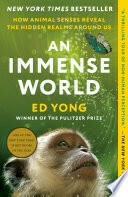
Needed this vibe. Currently reading: An Immense World by Ed Yong 📚