More on personal websites as digital gardens.
More on personal websites as digital gardens.
“Two things can be independently true about social media. First, there is no evidence that using these platforms is rewiring children’s brains or driving an epidemic of mental illness. Second, considerable reforms to these platforms are required, given how much time young people spend on them.”
For those who love to post, a guide to the Internet of the future.
Garbage Day on whether Bluesky was a net negative for left politics. I’d argue the most important thing Bluesky did/does is technical, by producing the AT protocol that underlies it, thereby building out the federated web. Distribution channels come and go, so consider posting at your own domain.
A look at the national decline in student test scores. It’s important to consider this alongside global trends in education as well.
Some contemporary thoughts from Ana Rodrigues on the perennial question of being a “woman in tech.”
Added a Wayback link preserver plugin to the site. This lightweight code detects broken external links on the blog and shows clickable Wayback Machine fallbacks so readers can still access the content. Handy when we’re working on the indie web where the web is fragile.

Finished reading: The Bluest Eye by Toni Morrison 📚
Reflections on teaching fiction writing in the age of AI, from a professor with ten years of classroom experience teaching writing at MIT.
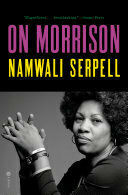
Read this alongside The Bluest Eye. Finished reading: On Morrison by Namwali Serpell 📚
Reading Timothy Chester’s reflections on last week’s Canvas incident. As institutions increasingly outsource the technical load to cloud service teams, IT incident response becomes about communication.
Watching a local phone ban policy snake through the community this week, one that state law now requires every district to adopt by July 1. Like others have already said, my concern is mostly related to enforcement, as we know enforcement for all school policy lands unevenly across school populations at the expense of Black students, and early data from Florida’s phone ban shows the same pattern. But also, my experience is that the local school system is not communicative in a way that reinforces student and parent desires for two-way communication, especially considering the logistics of having kids who need transportation and after school arrangements.
When I was young, there was a pay phone on every corner and a central landline in every home. We don’t live in that world anymore – in our world, phones and other personal devices are part of our daily processes for school, work and family logistics and communication with friends, family and the broader world. Same for kids with devices.
None of this means screens are neutral or that Jon Haidt is entirely wrong about attention and comparison dynamics. But Haidt et al diagnose a genuine social problem and locate the cause as technology design, then arrive at solutions that are driven by individual consumer behavior. He does ask legislators to act, but his asks center on age limits. Ultimately he does not call for taxing and regulating algorithmic platforms, regulating algorithmic amplification of distress, regulating algorithmic amplification of marketing, reducing economic precarity, or doing anything about climate change linked to tech. All of the behavioral changes indicated (device bans, Faraday bags) set up fights between kids and adults on phone access at the individual behavior level, fights with consequences that generally land harder on certain students. A UK study found no difference in student wellbeing between schools with restrictive and permissive phone policies, and a follow-up found that managing phones takes schools more than 100 staff hours a week either way.
While this issue roils locally, my kiddo’s locker was broken for two months this year, and while waiting for repair, she got dinged for having her device in her pocket in class when the locker wasn’t a secure option. She had shoes stolen from her locker in the meantime, proving the point.
I spoke with my kiddo at length to get her thoughts. Her takeaway as an 8th grader is that kids have second and third secret devices that they hide from parents and teachers already – often, mom and dad’s old devices slipped from a junk drawer and connected to wi-fi. She suggested we adults don’t fully appreciate the kids’ ingenuity around their devices, and how they view their phones and tablets as the means to get and stay connected with one another.
While talking, I was reminded of the dance between students and the school system’s IT department during the COVID-19 shutdown. In our community, the kids were in remote learning for a full year and a half, and the IT department chased them around their approved digital tools like a game of whack a mole, shutting down access to chat and collaboration. In the meantime, almost no socialization happened between students that wasn’t directly observed by teachers, on camera. By 2021, the kids were engaged in secret, digital note-passing, chatting within Google docs and slide decks to avoid teacher surveillance. Where there is a will, there is a way.
Update, September 26, 2026: The Madison School Board approved the policy on June 23, with tighter limits on high schoolers than a UW–Madison La Follette School research team had recommended. Parent Check On Tech, the group linked above, pushed for the stricter version. Elsewhere, a San Diego teacher reports that students hand over burner phones and keep their real ones.
It’s like the phrase “turtles all the way down,” but turtles are marketing.
A new group is attempting to map influence in the AI industry, with the goal to “produce a structured, shareable, and dynamic resource that identifies who is working on what, where the gaps are, and which partnerships might form across ideological and organizational lines.”
A new study suggests that people who use AI for writing are more able to detect AI writing than automated scanner tools. My current LLM pet peeve is how they use language like load-bearing, structural and legible to describe most ideas.

A quarter of the way in and already exhausted/confounded. Currently reading: Adult Braces by Lindy West 📚
“Amazon has launched a new feature that uses AI to generate a short, podcast-like audio segment where two AI ‘hosts’ discuss the merits and reviews of a specific product.”
I’m seeing grunge icons L7 in concert with Amyl and the Sniffers this summer and have been reading a lot about the ’90s indie rock era in the meantime. One frame I keep encountering positions grunge as regional punk musicians navigating a global, corporate pop mainstream – awkward, crass and vulgar, but in the big leagues all the same. Reading the Auf der Maur bio reminded me that a lot of the punk scene was steeped in ideas about social roles and archetypes and oriented around upending them – or at least giving them a healthy challenge. This subculture was also populated by poets and artists in the classical sense. The retro polish around ’90s pop culture has flattened that texture, but it was genuinely a thing.
The era also introduced the woman rock star, introducing women who wrote and performed with full creative authority, not just as muses, groupies or singers. The reception from fans and critics was mixed, and the discourse around Courtney Love in particular was gross and volatile. Most of the positions she was vilified for read as entirely unremarkable today. I was a teenager during all of this, too young to meaningfully participate, but the aesthetic dominated my early adolescence. At the time I loved Tori Amos and PJ Harvey like kids now love Chappell Roan. What I forgot over time is how literary the era was, and how romantic, both in the literary sense and in relation to the New Romantics of the 1980’s. Big culture lessons for a starry-eyed teenager.
L7’s music is not that deep – it’s metal for meatheads, by design – but their politics and presence were. While poking around, I found that L7 was one of four bands featured in the 1995 documentary film Not Bad For a Girl, which was co-produced by Love and Kurt Cobain. The film focused on several all-female indie punk bands and won Best Documentary at the New York Underground Film Festival in 1996. I’ve never heard of it before now. It got middling reviews from critics then, and it’s not available streaming in full in English, unless you’re viewing it here at this dubious Google Drive link – which I will do and report back.
It looks like Wordpress has produced a short-form blogging app that duplicates the model we are trying over here on the even-more-indie web. I might give it a spin.