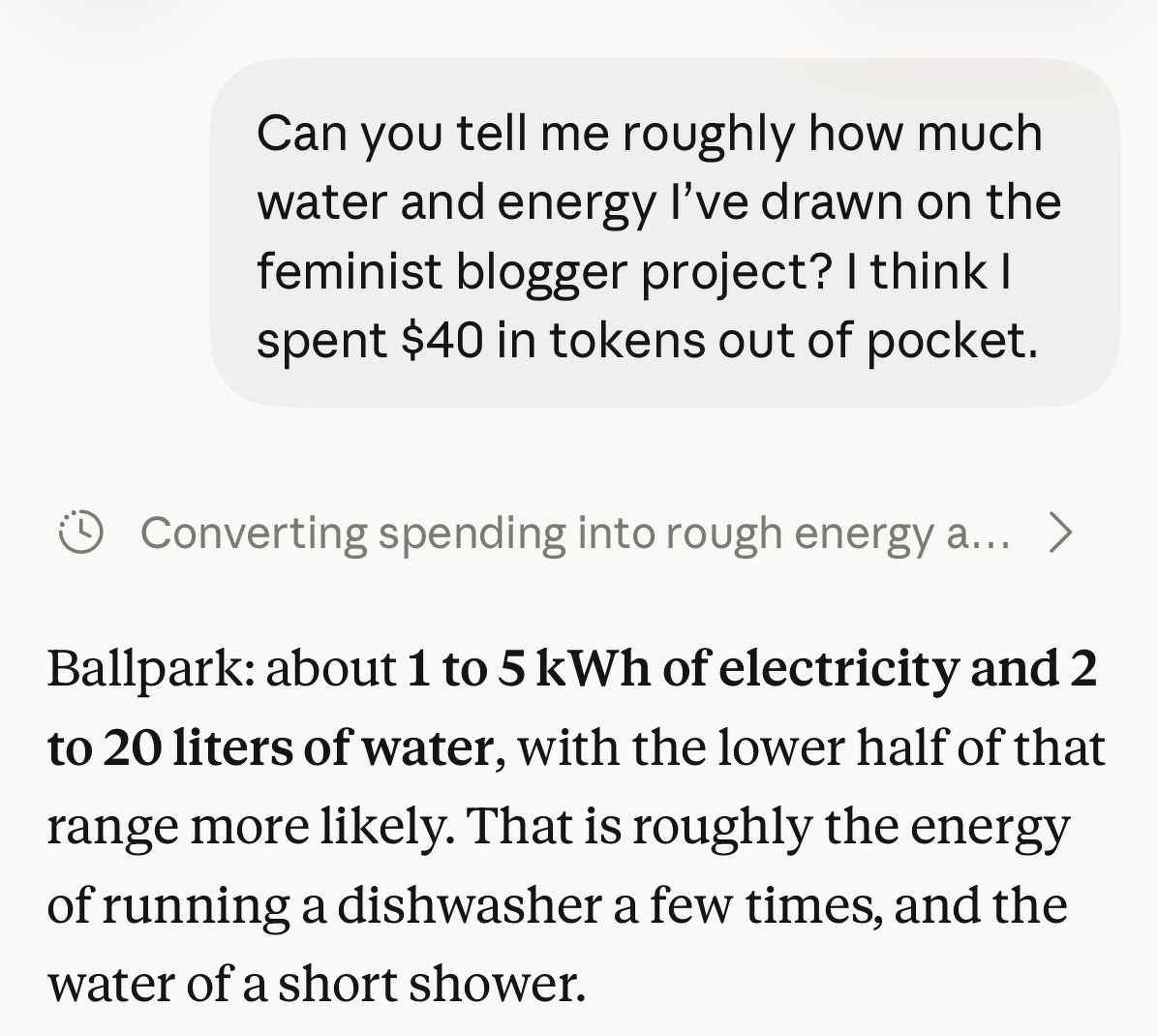
Access to tech: Enterprise level. Claude Pro plus added tokens (~$40 out of pocket after I ran through Claude Pro’s compute).
Process: Gemini pulled a roster based on the Roberts article in Jezebel. I strongly suspect my call for a “roster” shaped the inputs and outputs, making this cohort of writers look like a crew of fantasy football players or Marvel characters. All stats.
I asked Claude to analyze the data from my perspective, which includes people and details that aren’t part of the formal record, allowing for compare and contrast. To get here, I had to publish and republish the prompt almost forty times to better anonymize the data while protecting the writers included.
The “thickness” heuristic applied is totally made up - Claude took my thoughts about Donna Haraway and McMillan Cottom’s work and wove them through my thoughts about information architecture that I first learned from Dr. B.
Claude scanned the final draft for legal and privacy concerns. Everything here is publicly available online today, because it is currently live or lives somewhere as a ghost in the machine, whether via Wikipedia or the Wayback Machine or otherwise.
Blog note: Because of how my blog is set up to automagically find Wayback links for old URLs, if I publish my reference list, it would open a social and informational can of worms. So the (extensive) reference list will continue to live on the Claude report rather than being indexed into my link library.
I gave Claude permission to look across public data, crack windows and open doors, and to annotate and proceed as it worked, rather than keeping the decisions with me, then shaped the final strawman into what’s here. This took about half a day to pull together - yammering at the data within the Claude interface until it looked reasonable. Imagine having resources and a data scientist apply themselves here, with long reach and memory, with implications for trust, safety, consent and memory in every direction.
In the meantime Claude shut me down for the week (too much compute). I had to wait until this morning to ask Claude how much energy it took to run this report as I did, as a rookie and everyday practitioner.
Neither company publishes a timeline, and most of the numbers floating around come from SEO consultants, so treat this as rough. The short answer is that Gemini usually gets there faster because it searches Google’s index, while Claude appears to search Brave’s, which fills in more slowly.
Gemini grounds its answers in Google Search, so its lag is roughly Google’s indexing lag. That can mean a few days for a page on an established site and two to six weeks for everything else. If your robots.txt blocks Google-Extended, Gemini won’t use your pages for grounding at all.
If you paste a URL directly into either chat, the model reads the page right away without waiting on any index. To check whether you’re findable, search your domain on search.brave.com and in Google Search Console. Blocking ClaudeBot, the training crawler, doesn’t stop Claude from citing you; Claude-SearchBot is the one that governs search.
Fellow SEO/GEO nerds are citing an average of six days to show up in Google’s systems, though it is sometimes taking as long as thirty days on smaller, less-visited sites.
My digital presence has been deliberately fractured for years, so I’m watching how this site stitches together my breadcrumbs through SEO, with the serious stuff and throwaway asides alongside the occasional hilarity. Currently one of my top Google results.
Interesting to see web and print magazines talk about their strategy and value proposition since Google adopted an A.I.-powered search feature. x.com/pastemaga…
Search engines deliver answers instead of links. What does it mean for web traffic - and the outlets, people and jobs who rely on it? Inside the Media’s Traffic Apocalypse