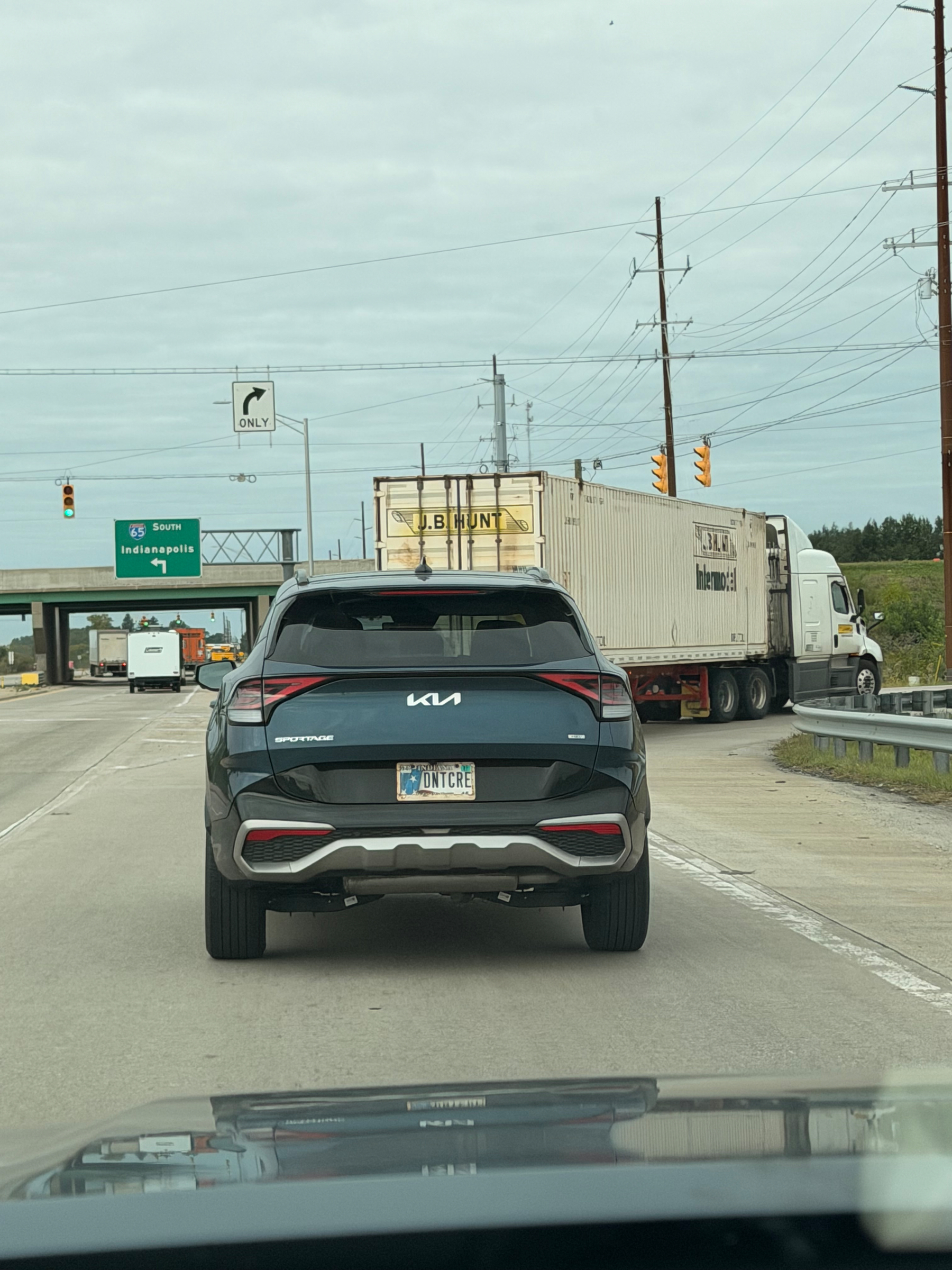
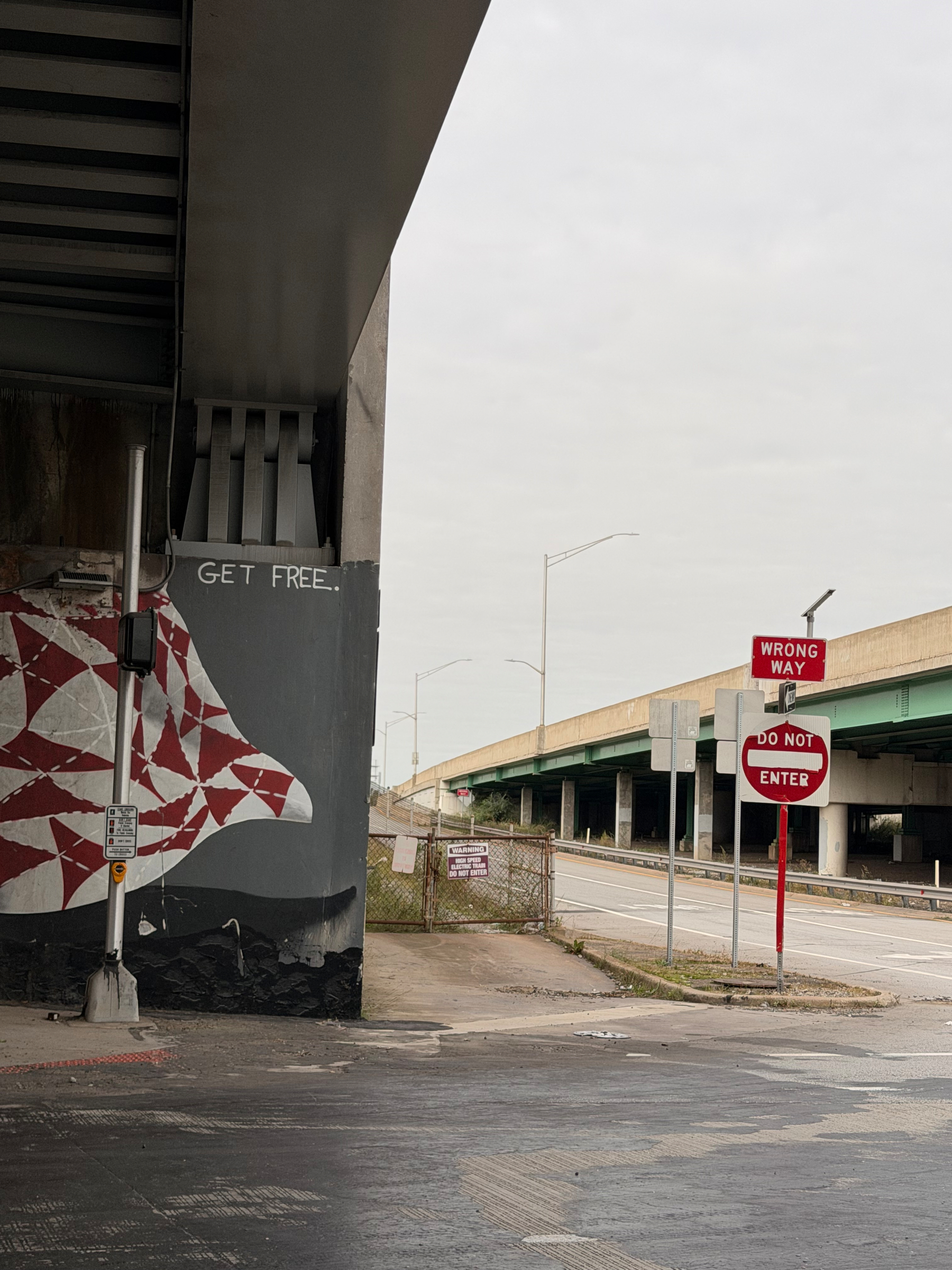
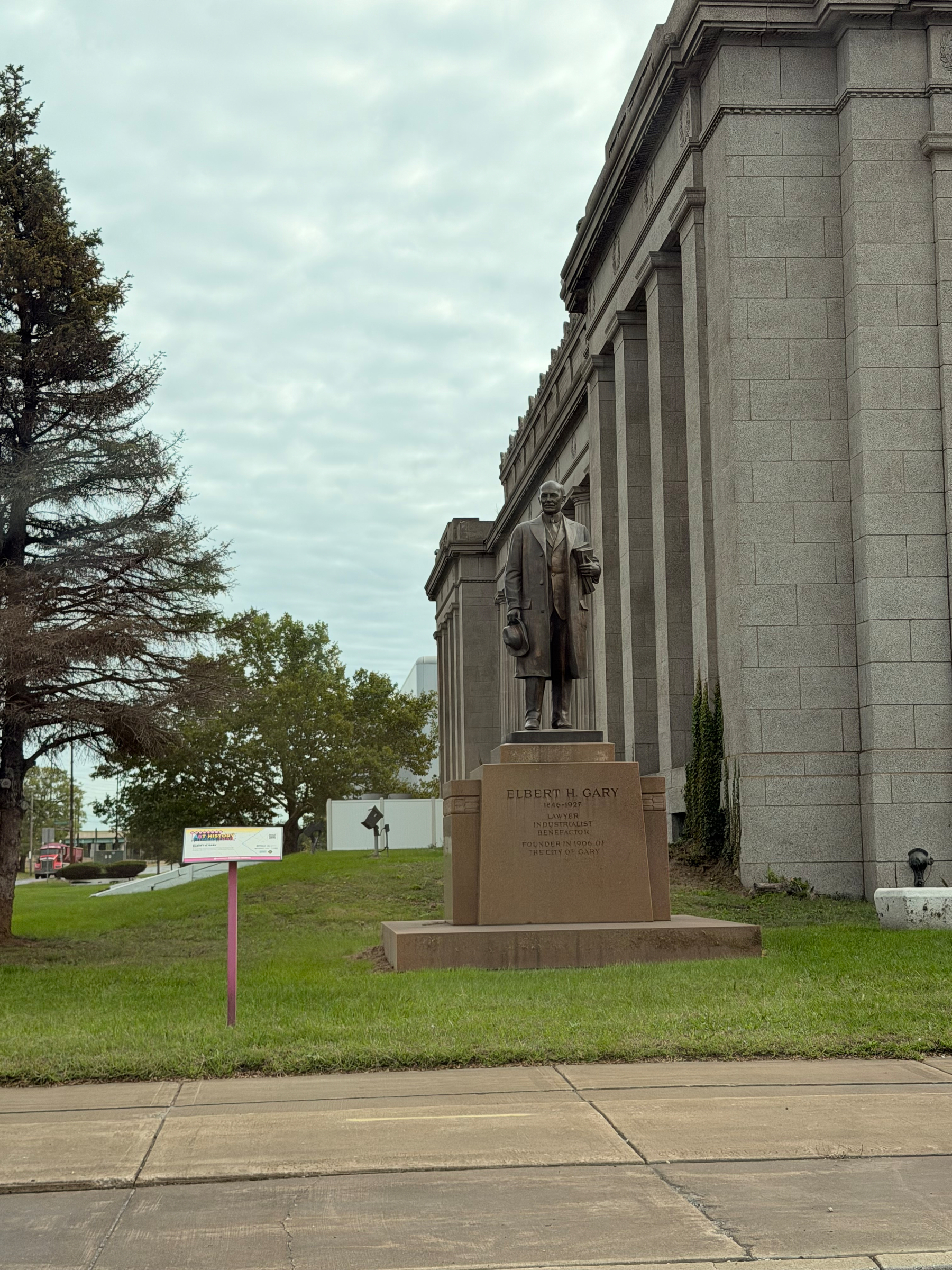
Yesterday I cut through Gary to get around a traffic jam on the toll road and picked up the Dan Ryan and the Skyway. Since living in Madison, I’ve made some version of that drive more times than I can count. I grew up south of Gary, at the edge of what a colleague called “the Chicago ombré,” and in my twenties my friends and I spent our weekends in The Region, thrifting our way across Lake County and hitting 18+ hip hop clubs in East Chicago. (King Von measured the same gradient from the city side in “Took Her to the O.”) To many, Gary is the city you drive through on the way to somewhere else.
The Skyway has a long political history: Chicago built it in 1958 with revenue bonds, then the bonds defaulted in 1963, and the city spent the next few decades catching up on deferred maintenance, according to Louise Nelson Dyble’s history of the road. In 2005, the Daley administration leased it for 99 years to Cintra and Macquarie for $1.83 billion, making it the first existing toll road in the country to be privatized. Eleven years later, the consortium sold the lease to three Canadian pension funds for $2.8 billion. The crossing now costs $8.10 in a car, and CBS Chicago reports that tolls have gone up more than 200 percent since the lease, about three and a half times the rate of inflation.
Indiana saw the incentives in this arrangement and followed along. In 2006, then-governor Mitch Daniels leased the Indiana Toll Road to the same Macquarie-Cintra group for 75 years and $3.8 billion, and he used the money to pay for Major Moves, his statewide highway program. Stateline’s 2012 retrospective called the lease one of the most divisive things Daniels did as governor. The bill passed without a single House Democrat, and the Region hated it. At a town hall in Crown Point, one resident told Daniels the deal amounted to taxation without representation. The operator went into Chapter 11 in 2014, and an Australian fund bought the lease the next year for $5.7 billion. A big share of the original money built I-69 between Evansville and the Crane Naval Base, at the other end of the state. When Eric Holcomb later approved a truck toll hike in exchange for another $1 billion, he had to deny in public that the Region was once again paying for highways its drivers would never use.
The state keeps the paperwork on deals like these. The Indiana State Archivesopened a new downtown building in Indianapolis on Thursday after 25 years in a “temporary” warehouse on East 30th Street, a former RCA record-stamping plant whose roof leaked partly because people shot holes in it. An old combination safe in the new building holds the state’s original constitutions, Jim Jones’s church incorporation papers, and Donald Trump’s application for a casino in Gary. Upstairs, a conservator expects to spend four to six weeks piecing together a Porter County survey map that had broken into fragments. The reading room is open to the public Tuesday through Saturday, and the staff asks you to make an appointment so they can pull the boxes before you arrive.
Freddie Gibbs grew up on Gary’s east side, and Jeff Weiss has profiled him twice. The 2021 profile in The Ringer catches Gibbs around his Grammy nomination for Alfredo and opens on a 2009 visit to his Van Nuys apartment, where Gibbs told Weiss that robbing freight trains was a popular hobby back home. Weiss’s earlier piece, The Miseducation of Freddie Gibbs, adds that one of Gibbs’s teachers got fired for robbing them too.
(Weiss, bless him, professes not to understand the rabbit metaphor present throughout Gibbs’ work, yet confidently persists.)
Gibbs’s father, Warren Tipton, spent about twenty years on the Gary police force and later sang with the Chi-Lites. He died in May, and AllHipHop’s obituary places him in the same Gary music scene that produced the Jacksons. That detail stuck with me because my ex-father-in-law was a police officer and chief of police downstate during the same years, and also played drums in a local band. Jamelle Bouie has historically described police departments as “jobs for the boys,” a steady public paycheck handed to working-class men, and that fits both of their careers better than anything about their relationships to law and order. In towns where the mills were shedding jobs, a badge was one of the few paychecks that came with a pension, and a man who could sing still needed that safety net.
Policing in the Region has much uglier chapters than that. The Chicago Sun-Times has spent years covering the federal case against the Sin City Deciples, a motorcycle club founded in Gary in 1967. One member admitted he worked as a Gary police chaplain while killing two men, one of them the son of a former Gary police chief. The Chicago Reader’s Tiger King of the Midwest profiles Roy “Roy Boy” Cooper, who ran a tattoo shop called the Badlands with Bengal tigers in cages next to the chairs. Tattooing was illegal in Indiana then, and Cooper’s lawyer reportedly steered him to Gary because the police had bigger problems than a tattoo shop — as long as it paid its taxes. Media Burn has raw footage of Cooper setting a leashed tiger on a pool table while his wife runs through the rest of their animals, which included a grizzly bear and a baboon. In the video, Lady Cooper recommends taking the animals out in public, to the grocery store, socializing them on the locals.
Anderson went through the same collapse with auto parts. General Motors moved in during the 1920s and eventually ran two divisions there, Delco-Remy for electrical systems and Guide Lamp for headlights. By the time Jon Alpert made Dirty Driving: Thundercars of Indiana for HBO in 2008, a town that once had 33,000 GM jobs had empty factories and shuttered stores, and what was left of it went to the Anderson Speedway every Friday night. The Herald Bulletin caught up with one of the film’s drivers, Sammy Hawkins, as he flew home from the New York premiere to a Firestone job in Noblesville that he expected to lose. His line in the film is that Anderson doesn’t make cars anymore, but it can still race them and wreck them.
Music in Gary started in the mills. Joe Jackson ran a crane and played guitar in a band called the Falcons, which never got a record deal, so he kept the mill job and trained his sons into the Jackson 5 instead. Their first contract came from Steeltown Records, a Gary label, in 1967, and “Big Boy” was a local hit before Motown signed them. Most people in a mill town who can sing still need the day job, and the ones who make it usually leave.
Detroit turned its losses into techno. Juan Atkins, Derrick May, and Kevin Saunderson learned Kraftwerk and Parliament from a late-night DJ called the Electrifyin’ Mojo, and by 1987 more than half of Detroit’s manufacturing, retail, and wholesale base was gone, as SPIN reported in 1998. Midstory’s Built to Boom traces the line from the assembly plants through Motown to techno, and May describes sampling industrial noise, traffic, and construction into his tracks.
The techno ran straight into the rap Jorjiana grew up on. NPR’s piece on how Detroit and Flint became havens for rap dark horses credits the producer Helluva with a “basement sound” of ominous pianos and synth stabs, which he built by crossing West Coast gangsta rap with Detroit techno, and it describes the Flint rappers as a crew of flippant, vulgar jokers. Flintside’s history of the Flint scene shows how a co-sign from Detroit’s Peezy lifted Rio Da Yung OG and everyone around him. Lil Yachty spent years showing up on Michigan records, and he later vouched for Jorjiana too.
Jorjiana is 21, and a single mom, and from Michigan City, just down the shore from Gary. The Times of Northwest Indiana profiled her recently after “ILBB2” took off, and her Complex interview covers a childhood spent moving between relatives while her parents struggled with addiction. By her account, her music career started with screwing around with her friends around town. She and her friends were bored during the pandemic, so they freestyled in her car, and she posted the results, doing actual numbers. She told Justin Moran that her friends talked her into cross-posting the TikTok clips to Instagram, which she barely used, and that’s where the A&Rs found her. At the time she didn’t know what an A&R was. In a clip Complex posted, she admits she doesn’t know who Freddie Gibbs is either, so what ties her to Gary is the shoreline more than any influence. She should get familiar with his catalog (and a metronome!).
Plenty of good bands started as friends goofing off: Devo began as a satirical art project at Kent State, and the Maels studied graphic design and film at UCLA before Sparks. Edgar Wright’s The Sparks Brothers spends a lot of time on how they built their act for Top of the Pops closeups. Both bands treated the dominant screen of their time as part of the instrument. Jorjiana’s screen is the short-form feed, and I’ve been watching her work it for the last year or so: snippets of songs previewed, clips pushed to every platform, a freestyle on On The Radar at the end of 2024 that brought more than a dozen labels calling, a GloRilla remix, and co-signs from Lil Yachty and GloRilla.
If you want to know what Gary is doing now, read Capital B Gary, which covers the city more consistently than anyone else. Start with their feature on Koney King, a Broadway diner that has been serving chili for more than a century, and then look through their 2024 year in photos, which has residents cleaning up parks on the East Side and crowds on the beach for the eclipse.
Other notes: Akron went through its own version a decade later, with rubber instead of steel. Midstory’s history of how Akron became “the new Liverpool” describes Devo, Tin Huey, the Bizarros, and the Rubber City Rebels as kids from factory families trying not to follow their fathers into the plants. The scene got its home during one of the longest rubber workers’ strikes in the city’s history, when the Rubber City Rebels took over a rubber workers’ bar called the Crypt, as PBS Western Reserve tells it in It’s Everything, and Then It’s Gone. Chris Smith’s 2024 Devo documentary picks up the story from Kent State and follows the band into the early days of MTV.
Dolly Parton’s America: This nine-episode podcast offers a deep dive into the Dollyverse, covering Dolly’s biography and lore and her role as an icon within a broader story about American ideals. This series swept the best-of lists of 2019.
I can’t believe it’s mid-August. I’m terribly behind on my reading list. Still, I did want to draw attention to this entertaining and extremely shareable article on the glory of Record Head, a legendary record store in Milwaukee. Make sure to watch their public access TV commercials at the link.
I’ve been on vacation, which means I’ve been reading my fool face off. I’ve also caught several great live shows lately, including an incredible set by Australian no-wave noise band Party Dozen. It’s a two-person band and the saxophonist sings directly into the bell of her horn – energetic work.
I’m seeing grunge icons L7 in concert with Amyl and the Sniffers this summer and have been reading a lot about the ’90s indie rock era in the meantime. One frame I keep encountering positions grunge as regional punk musicians navigating a global, corporate pop mainstream – awkward, crass and vulgar, but in the big leagues all the same. Reading the Auf der Maur bio reminded me that a lot of the punk scene was steeped in ideas about social roles and archetypes and oriented around upending them – or at least giving them a healthy challenge. This subculture was also populated by poets and artists in the classical sense. The retro polish around ’90s pop culture has flattened that texture, but it was genuinely a thing.
The era also introduced the woman rock star, introducing women who wrote and performed with full creative authority, not just as muses, groupies or singers. The reception from fans and critics was mixed, and the discourse around Courtney Love in particular was gross and volatile. Most of the positions she was vilified for read as entirely unremarkable today. I was a teenager during all of this, too young to meaningfully participate, but the aesthetic dominated my early adolescence. At the time I loved Tori Amos and PJ Harvey like kids now love Chappell Roan. What I forgot over time is how literary the era was, and how romantic, both in the literary sense and in relation to the New Romantics of the 1980’s. Big culture lessons for a starry-eyed teenager.
L7’s music is not that deep – it’s metal for meatheads, by design – but their politics and presence were. While poking around, I found that L7 was one of four bands featured in the 1995 documentary film Not Bad For a Girl, which was co-produced by Love and Kurt Cobain. The film focused on several all-female indie punk bands and won Best Documentary at the New York Underground Film Festival in 1996. I’ve never heard of it before now. It got middling reviews from critics then, and it’s not available streaming in full in English, unless you’re viewing it here at this dubious Google Drive link – which I will do and report back.
This post is mostly an excuse to talk about my latest playlist: Digital Animal. This one consists of about 200 songs across genres, all reflecting on our human relationship to science and technology, futurism, digital culture and the internet.
When I’m chewing over a big idea, I like to compile resources in and around that idea to help support my thinking. Embracing my angst about artificial intelligence, I started compiling songs that reach back to the early 20th century, tapping into prior generations’ anxieties about telephones, television and early networking technology, adding more contemporary concerns as I went. The playlist runs from David Bowie and Blue Öyster Cult and Kraftwerk to Zapp and Radiohead, then forward into modern takes on social media, cell phones, and the internet from Missy Elliott, Gillian Welch and Charli XCX.
I like a playlist because it’s convenient, and because songs are one place where meaning and feeling are created simultaneously, and because it’s easy to spot salient patterns across disparate sources. Scholars in interdisciplinary studies have long argued that you cannot fully understand a thing without understanding what it feels like to live with it, and that cultural analysis may get you there faster than surveys will anyway. Meanwhile most writing about technology separates feelings from form and function. Art and music compress all three, and have the potential to surface ideas that professional and institutional language can’t. Art and culture frequently peg an issue down before emerging best practices are formalized in business and academia.
For anyone working in technology communications, that lag between culture and practice has practical consequences. The language we use to describe technical systems shapes what people can think and do about those systems. An institutional frame — efficiency, access, innovation, value — consistently misses important dynamics that people living inside those systems are experiencing as users and as people. Art keeps the human subject inside the frame, functioning as both anecdote and data.
Plus, it’s fun and we should collectively think about art as much as possible. So, treat every song like a portal.
What does it mean to be both digital and animal? Some observations:
Between the era of telephones and the digital web, there are a charming number of songs about beepers, beeping and pagers. I’m hopelessly devoted to Missy’s “Beep Me 911” right now.
Lots of songs from peak elder Millennial/Gen X songwriters are about watching the old analog world being swallowed by the new. The older the songs, the more aware they are of the machine across the room, and the more they lean into allegory. The contemporary songs don’t worry about the boundary between human and machine much at all, likely reflecting the high level of technical integration (and acceptance) we live with right now.
Is fretting about our relationship to tech and industry part of the human condition? Or is there something specific to tech that accelerates these anxieties and impulses?
A few favs:
I’m enjoying almost everything from the band Automatic. One of the band members is the daughter of the drummer from Bauhaus, and their work is heavily influenced by 80s era synth pop and new wave. I have several of their songs represented on the list, and particularly like “Black Box” off their 2025 album.
Erykah Badu’s “Cel U Lar Device,” which positions the phone as an instrument of interpersonal surveillance, has been on rotation in my house for (cough) years. It is also a reinterpretation of Drake’s hit “Hotline Bling,” itself forever memorialized as a popular meme format.
The Talking Heads’ 1988 “(Nothing but) Flowers” imagines a sunny life after the fall of industrial civilization. For the doomer take on this theme, check out Nina Simone’s cover of “22nd Century.”
Sophie’s “Faceshopping” is about the negative pressures of cultivating a public persona and brand, and tips a hat to our relatively new ability to use science and technology to curate a physical appearance that matches your internal (and digital) one.
RIP D’Angelo. And a good occasion to reread this excellent 2012 profile discussing fame, religion, and how his status as a sex symbol in his youth negatively impacted D’Angelo’s self-esteem - and ultimately his career.
Still maintaining this sprawling 1200+ song playlist of indie music across genres, focused on women vocalists and players. open.spotify.com/playlist/…
A quick read by a singular voice, heavy on descriptions of the New York art and music scene of the 90s. Like many punk memoirs, it’s a tribute to the many names that made the movement and a memorial for a city that no longer exists. Gordon’s voice is kind and bold, curious and smart. Her descriptions of growing up in LA and coming of age in New York are painterly and poetic. Her takes are generous for all but one person: her ex-husband.
All my respect to her for opening and closing the books with her raw reflections on Thurston’s mundane and deeply uncool betrayal.
PJ Harvey is one of my favorite musicians because she is a weirdo and an artist in the same vein as a Kate Bush, or even a Bob Dylan, who concentrates on mythology, atmosphere, artistry and sense of place. For a lot of my life, my fav album was “Rid of Me.” It was present in a lot of formative moments as a kid and still resonates for me as an adult, despite some of its flourishes not aging well. As an adult, “Let England Shake” genuinely moved me. She draws on music and poetry traditions to explore what it means for England to be an empire, sitting atop a throne of bones and bloodshed. It’s ambitious and dark and sounds incredible, in part thanks to her use of the autoharp (yes, seriously).
She’s also among the artists who made a hard left in my musical interests as a kid, when she and John Parish released “Dance Hall at Louse Point.” This album was called career suicide when it came out because it is so atonal and avant garde. As an album, listening from beginning to end, it’s delightfully sinister. It could be a sister or a cousin album to Nick Cave’s “Murder Ballads.”
For the old heads, “No Alternative,” the 1993 AIDS benefit compilation album, turns 30 today. www.stereogum.com/1541231/n…
Made the mistake of telling my family I’ve had “Like a Rock” in my head all day, and now my family is streaming Bob Seger videos and old Chevy commercials.