History of the NWI “Hell is Real” sign. More on Reddit. And more from Reuters in 2007.
History of the NWI “Hell is Real” sign. More on Reddit. And more from Reuters in 2007.
Eve Ewing on the slow disaster encroaching on Chicago’s South Side, and a relevant companion to the NHJ piece circulating so widely this week. Also related.
🎵: A Thousand Mountains - Freddie Gibbs and The Alchemist
Yesterday I cut through Gary to get around a traffic jam on the toll road and picked up the Dan Ryan and the Skyway. Since living in Madison, I’ve made some version of that drive more times than I can count. I grew up south of Gary, at the edge of what a colleague called “the Chicago ombré,” and in my twenties my friends and I spent our weekends in The Region, thrifting our way across Lake County and hitting 18+ hip hop clubs in East Chicago. (King Von measured the same gradient from the city side in “Took Her to the O.”) To many, Gary is the city you drive through on the way to somewhere else.
The Skyway has a long political history: Chicago built it in 1958 with revenue bonds, then the bonds defaulted in 1963, and the city spent the next few decades catching up on deferred maintenance, according to Louise Nelson Dyble’s history of the road. In 2005, the Daley administration leased it for 99 years to Cintra and Macquarie for $1.83 billion, making it the first existing toll road in the country to be privatized. Eleven years later, the consortium sold the lease to three Canadian pension funds for $2.8 billion. The crossing now costs $8.10 in a car, and CBS Chicago reports that tolls have gone up more than 200 percent since the lease, about three and a half times the rate of inflation.
Indiana saw the incentives in this arrangement and followed along. In 2006, then-governor Mitch Daniels leased the Indiana Toll Road to the same Macquarie-Cintra group for 75 years and $3.8 billion, and he used the money to pay for Major Moves, his statewide highway program. Stateline’s 2012 retrospective called the lease one of the most divisive things Daniels did as governor. The bill passed without a single House Democrat, and the Region hated it. At a town hall in Crown Point, one resident told Daniels the deal amounted to taxation without representation. The operator went into Chapter 11 in 2014, and an Australian fund bought the lease the next year for $5.7 billion. A big share of the original money built I-69 between Evansville and the Crane Naval Base, at the other end of the state. When Eric Holcomb later approved a truck toll hike in exchange for another $1 billion, he had to deny in public that the Region was once again paying for highways its drivers would never use.
The state keeps the paperwork on deals like these. The Indiana State Archives opened a new downtown building in Indianapolis on Thursday after 25 years in a “temporary” warehouse on East 30th Street, a former RCA record-stamping plant whose roof leaked partly because people shot holes in it. An old combination safe in the new building holds the state’s original constitutions, Jim Jones’s church incorporation papers, and Donald Trump’s application for a casino in Gary. Upstairs, a conservator expects to spend four to six weeks piecing together a Porter County survey map that had broken into fragments. The reading room is open to the public Tuesday through Saturday, and the staff asks you to make an appointment so they can pull the boxes before you arrive.
Gary has been on the wrong end of these deals since before it had a name. Paige Williams’s New Yorker piece on Gary and U.S. Steel asks whether a company town once called “the most miserable city in America” can remake itself. U.S. Steel founded Gary in 1906 to house the workers for its mills, and in 1920 Carl Sandburg published a poem about how the people running the place saw those workers.
Freddie Gibbs grew up on Gary’s east side, and Jeff Weiss has profiled him twice. The 2021 profile in The Ringer catches Gibbs around his Grammy nomination for Alfredo and opens on a 2009 visit to his Van Nuys apartment, where Gibbs told Weiss that robbing freight trains was a popular hobby back home. Weiss’s earlier piece, The Miseducation of Freddie Gibbs, adds that one of Gibbs’s teachers got fired for robbing them too.
(Weiss, bless him, professes not to understand the rabbit metaphor present throughout Gibbs’ work, yet confidently persists.)
Gibbs’s father, Warren Tipton, spent about twenty years on the Gary police force and later sang with the Chi-Lites. He died in May, and AllHipHop’s obituary places him in the same Gary music scene that produced the Jacksons. That detail stuck with me because my ex-father-in-law was a police officer and chief of police downstate during the same years, and also played drums in a local band. Jamelle Bouie has historically described police departments as “jobs for the boys,” a steady public paycheck handed to working-class men, and that fits both of their careers better than anything about their relationships to law and order. In towns where the mills were shedding jobs, a badge was one of the few paychecks that came with a pension, and a man who could sing still needed that safety net.
Policing in the Region has much uglier chapters than that. The Chicago Sun-Times has spent years covering the federal case against the Sin City Deciples, a motorcycle club founded in Gary in 1967. One member admitted he worked as a Gary police chaplain while killing two men, one of them the son of a former Gary police chief. The Chicago Reader’s Tiger King of the Midwest profiles Roy “Roy Boy” Cooper, who ran a tattoo shop called the Badlands with Bengal tigers in cages next to the chairs. Tattooing was illegal in Indiana then, and Cooper’s lawyer reportedly steered him to Gary because the police had bigger problems than a tattoo shop — as long as it paid its taxes. Media Burn has raw footage of Cooper setting a leashed tiger on a pool table while his wife runs through the rest of their animals, which included a grizzly bear and a baboon. In the video, Lady Cooper recommends taking the animals out in public, to the grocery store, socializing them on the locals.
Anderson went through the same collapse with auto parts. General Motors moved in during the 1920s and eventually ran two divisions there, Delco-Remy for electrical systems and Guide Lamp for headlights. By the time Jon Alpert made Dirty Driving: Thundercars of Indiana for HBO in 2008, a town that once had 33,000 GM jobs had empty factories and shuttered stores, and what was left of it went to the Anderson Speedway every Friday night. The Herald Bulletin caught up with one of the film’s drivers, Sammy Hawkins, as he flew home from the New York premiere to a Firestone job in Noblesville that he expected to lose. His line in the film is that Anderson doesn’t make cars anymore, but it can still race them and wreck them.
Music in Gary started in the mills. Joe Jackson ran a crane and played guitar in a band called the Falcons, which never got a record deal, so he kept the mill job and trained his sons into the Jackson 5 instead. Their first contract came from Steeltown Records, a Gary label, in 1967, and “Big Boy” was a local hit before Motown signed them. Most people in a mill town who can sing still need the day job, and the ones who make it usually leave.
Detroit turned its losses into techno. Juan Atkins, Derrick May, and Kevin Saunderson learned Kraftwerk and Parliament from a late-night DJ called the Electrifyin’ Mojo, and by 1987 more than half of Detroit’s manufacturing, retail, and wholesale base was gone, as SPIN reported in 1998. Midstory’s Built to Boom traces the line from the assembly plants through Motown to techno, and May describes sampling industrial noise, traffic, and construction into his tracks.
The techno ran straight into the rap Jorjiana grew up on. NPR’s piece on how Detroit and Flint became havens for rap dark horses credits the producer Helluva with a “basement sound” of ominous pianos and synth stabs, which he built by crossing West Coast gangsta rap with Detroit techno, and it describes the Flint rappers as a crew of flippant, vulgar jokers. Flintside’s history of the Flint scene shows how a co-sign from Detroit’s Peezy lifted Rio Da Yung OG and everyone around him. Lil Yachty spent years showing up on Michigan records, and he later vouched for Jorjiana too.
Jorjiana is 21, and a single mom, and from Michigan City, just down the shore from Gary. The Times of Northwest Indiana profiled her recently after “ILBB2” took off, and her Complex interview covers a childhood spent moving between relatives while her parents struggled with addiction. By her account, her music career started with screwing around with her friends around town. She and her friends were bored during the pandemic, so they freestyled in her car, and she posted the results, doing actual numbers. She told Justin Moran that her friends talked her into cross-posting the TikTok clips to Instagram, which she barely used, and that’s where the A&Rs found her. At the time she didn’t know what an A&R was. In a clip Complex posted, she admits she doesn’t know who Freddie Gibbs is either, so what ties her to Gary is the shoreline more than any influence. She should get familiar with his catalog (and a metronome!).
Plenty of good bands started as friends goofing off: Devo began as a satirical art project at Kent State, and the Maels studied graphic design and film at UCLA before Sparks. Edgar Wright’s The Sparks Brothers spends a lot of time on how they built their act for Top of the Pops closeups. Both bands treated the dominant screen of their time as part of the instrument. Jorjiana’s screen is the short-form feed, and I’ve been watching her work it for the last year or so: snippets of songs previewed, clips pushed to every platform, a freestyle on On The Radar at the end of 2024 that brought more than a dozen labels calling, a GloRilla remix, and co-signs from Lil Yachty and GloRilla.
If you want to know what Gary is doing now, read Capital B Gary, which covers the city more consistently than anyone else. Start with their feature on Koney King, a Broadway diner that has been serving chili for more than a century, and then look through their 2024 year in photos, which has residents cleaning up parks on the East Side and crowds on the beach for the eclipse.
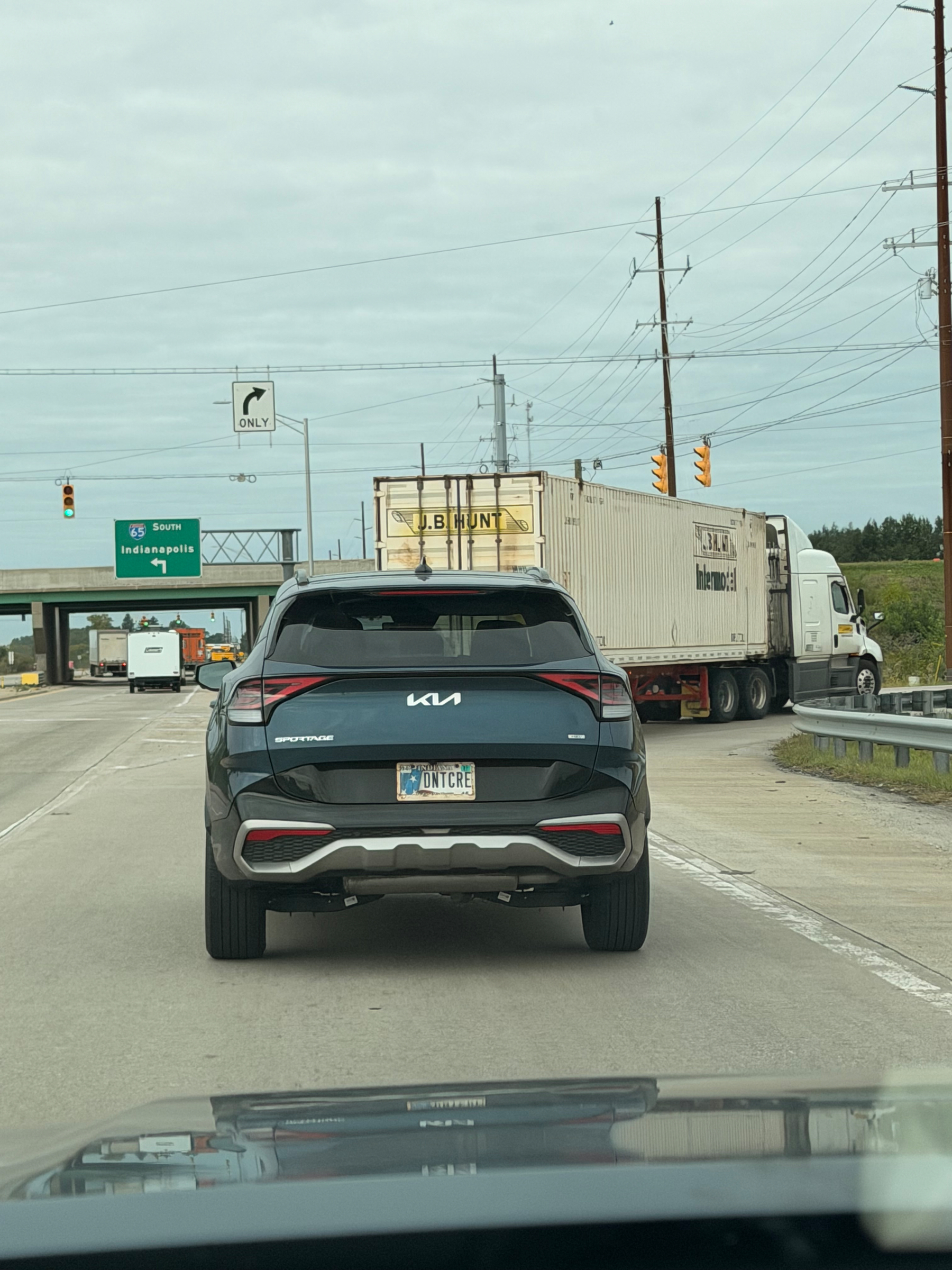
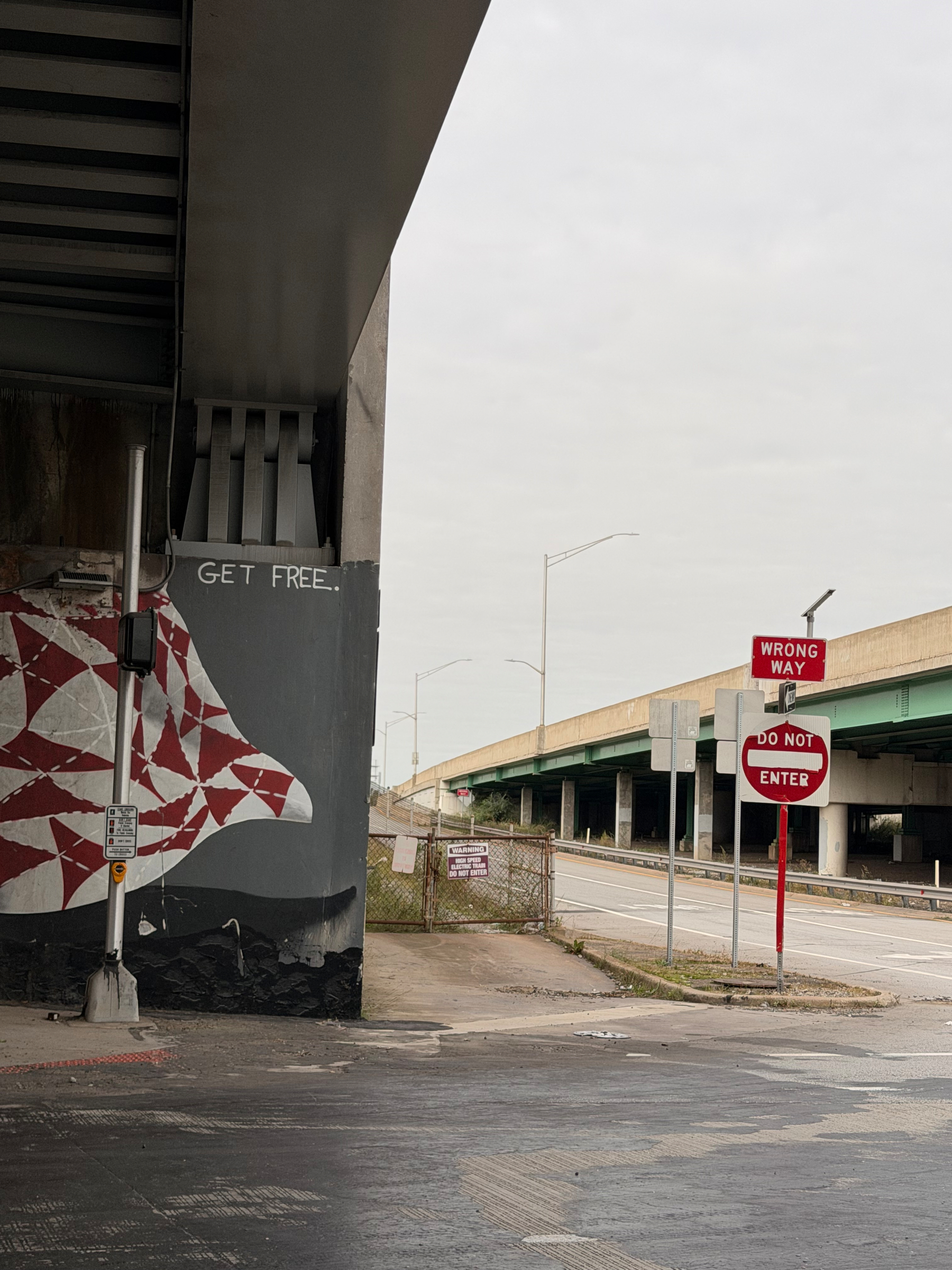
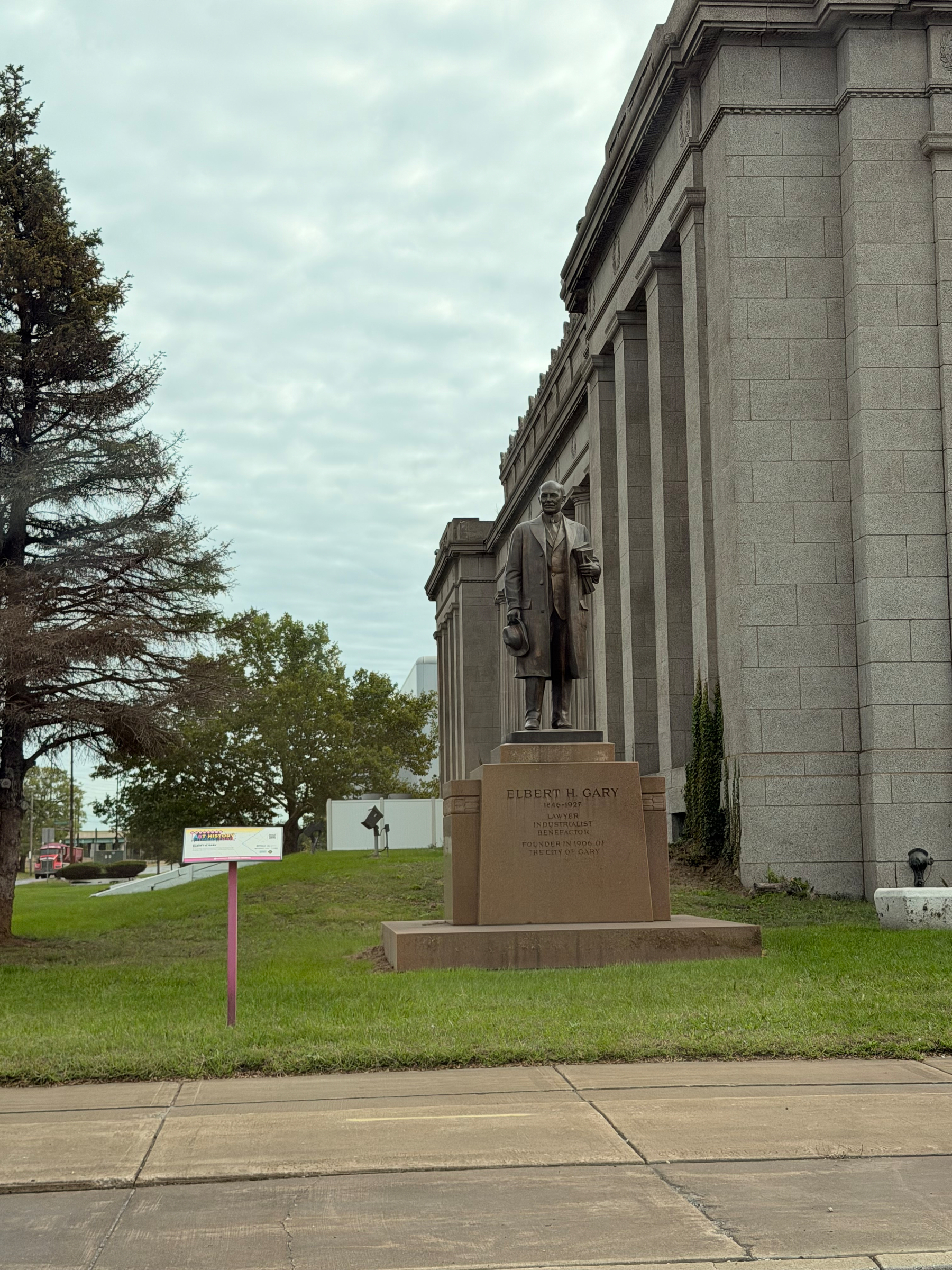
I, myself, had a run-in with a white supremacist Indiana biker gang in my twenties in West Lafayette, also connected to a money-laundering tattoo shop. Someday I’ll commit the story to paper.
Other notes: Akron went through its own version a decade later, with rubber instead of steel. Midstory’s history of how Akron became “the new Liverpool” describes Devo, Tin Huey, the Bizarros, and the Rubber City Rebels as kids from factory families trying not to follow their fathers into the plants. The scene got its home during one of the longest rubber workers’ strikes in the city’s history, when the Rubber City Rebels took over a rubber workers’ bar called the Crypt, as PBS Western Reserve tells it in It’s Everything, and Then It’s Gone. Chris Smith’s 2024 Devo documentary picks up the story from Kent State and follows the band into the early days of MTV.
A recent article on the Indiana Quaker community’s place in the Underground Railroad.
Recommended: Bike Jerks and the Hodag Country Ramble.
The university is back in session, so the city’s lineup of food trucks are back in formation. Some tips:
Several years ago, many people were weighing the possibility that the Madison food truck economy would struggle to recover after the long shutdown, worried because this scene is one of the things that makes the urban food desert more livable during the workday and supports a great deal of local culture with it. This makes your participation in the little treat economy practically a civic responsibility.
Cap Times on Electric Heart, the new EP by Madison songwriter Whitney Mann.
I found out about a hyperlocal newsletter in my neighborhood and had to share. The Monroe Street Tattler offers print delivery and email distribution, and reports only on the hard local news, such as dog walk water bowl locations and the best fries in the neighborhood, among other ephemera.
UW–Madison communication professor Catalina Toma argues that technology-mediated communication more often supports human connection and well-being than harms it, provided people use it intentionally.
Watching a local phone ban policy snake through the community this week, one that state law now requires every district to adopt by July 1. Like others have already said, my concern is mostly related to enforcement, as we know enforcement for all school policy lands unevenly across school populations at the expense of Black students, and early data from Florida’s phone ban shows the same pattern. But also, my experience is that the local school system is not communicative in a way that reinforces student and parent desires for two-way communication, especially considering the logistics of having kids who need transportation and after school arrangements.
When I was young, there was a pay phone on every corner and a central landline in every home. We don’t live in that world anymore – in our world, phones and other personal devices are part of our daily processes for school, work and family logistics and communication with friends, family and the broader world. Same for kids with devices.
None of this means screens are neutral or that Jon Haidt is entirely wrong about attention and comparison dynamics. But Haidt et al diagnose a genuine social problem and locate the cause as technology design, then arrive at solutions that are driven by individual consumer behavior. He does ask legislators to act, but his asks center on age limits. Ultimately he does not call for taxing and regulating algorithmic platforms, regulating algorithmic amplification of distress, regulating algorithmic amplification of marketing, reducing economic precarity, or doing anything about climate change linked to tech. All of the behavioral changes indicated (device bans, Faraday bags) set up fights between kids and adults on phone access at the individual behavior level, fights with consequences that generally land harder on certain students. A UK study found no difference in student wellbeing between schools with restrictive and permissive phone policies, and a follow-up found that managing phones takes schools more than 100 staff hours a week either way.
While this issue roils locally, my kiddo’s locker was broken for two months this year, and while waiting for repair, she got dinged for having her device in her pocket in class when the locker wasn’t a secure option. She had shoes stolen from her locker in the meantime, proving the point.
I spoke with my kiddo at length to get her thoughts. Her takeaway as an 8th grader is that kids have second and third secret devices that they hide from parents and teachers already – often, mom and dad’s old devices slipped from a junk drawer and connected to wi-fi. She suggested we adults don’t fully appreciate the kids’ ingenuity around their devices, and how they view their phones and tablets as the means to get and stay connected with one another.
While talking, I was reminded of the dance between students and the school system’s IT department during the COVID-19 shutdown. In our community, the kids were in remote learning for a full year and a half, and the IT department chased them around their approved digital tools like a game of whack a mole, shutting down access to chat and collaboration. In the meantime, almost no socialization happened between students that wasn’t directly observed by teachers, on camera. By 2021, the kids were engaged in secret, digital note-passing, chatting within Google docs and slide decks to avoid teacher surveillance. Where there is a will, there is a way.
Update, September 26, 2026: The Madison School Board approved the policy on June 23, with tighter limits on high schoolers than a UW–Madison La Follette School research team had recommended. Parent Check On Tech, the group linked above, pushed for the stricter version. Elsewhere, a San Diego teacher reports that students hand over burner phones and keep their real ones.
Fellow Madisonians, someone pulled together a website ranking local businesses in Madison by how local they are (by what criteria, idk). In my experience, this is one way we’re likely to see AI used in the next couple of years, via prototyping and/or executing ideas that result in dynamic websites.
What the internet was made for: A Chicago music fan secretly recorded over 10,000 live concerts from Nirvana to Sonic Youth to Spoon, and has made them all available online.
Angst about data center development continues to grow in the Rust Belt.
Just experienced my first thundersleet.
A pal sent along this exceedingly cool article on an art space on the south side of Madison, WI, that marries quilting and memory care.
My friend Dave Bangert has been a Midwestern reporter for thirty years, and began his own newsletter project after layoffs and mergers emptied his local newsroom. Now his 8000 subscriber project is a major influence in a Big Ten town that otherwise has a weak media market. In this podcast he talks about how it all works, what we lose as legacy media dries up, and what it means when your readers know exactly who you are, and you run into them in the produce aisle.
As a true blue Hoosier, here’s my hot take on the Chicago Bears moving to Hammond: no dunking on NWI.
I’m seeing a lot of disgust for Indiana in related Bears commentary that troubles me, especially the comments about NWI as a place of blight, beyond consideration or repair, obscuring the stakes behind a regional geography of race and class. Meanwhile, I am glad that people from Chicago suburbs have found occasion to think about their neighbors in Hammond and Gary. There is life outside of Schaumburg.
Indiana’s history as a state is thick with race and class problems, perhaps best captured in the old phrase calling it the “middle finger of the South thrust into the North.” That middle finger reaches right up and touches Chicagoland. Indiana’s policy approach to this dynamic is predictably toxic, having cleaved communities like Hammond and Gary from state investments and statehouse power. Indy loves business and it loves a chance to razz Chicago. Guess why.
“The Region” in Northwest Indiana is practically and functionally the south side of Chicago. You can drive from Gary through East Chicago and Whiting straight into Pullman and Bronzeville, without much marking a state line other than some signage and an iconic White Castle. But everything on the Indiana side of the line is governed from a statehouse that rarely considers them at all until there’s a chance to further demean and isolate them. Like so, with Indiana’s current plans for redistricting that further disenfranchise Gary residents.
Does it serve to remind us that Gary was founded as a company town by the world’s first billion dollar corporation? I think so (and great article btw). The town was the subject of serious curiosity and consternation during the early days of industrialization, especially when comparing the claims of the owners and capitalists to the realities of the workers. Poet Carl Sandburg famously wrote the poem “The Mayor of Gary” to illustrate the casual venality that the ownership class felt toward the steelworkers. This dynamic is still very much alive in the minds of the people in surrounding communities, who are perpetually worried about a “Chicago influence.”
This is why we train a jaundiced eye on characterizing working class communities like they’re beyond consideration or redemption. The world isn’t a Costco. People live among the brownfields. I spent a lot of time in this area in my twenties – all my friends in The Region were somehow connected to US Steel, even still. Feel however you feel about the Bears deal, but we don’t do Gary slander in this house.
Yanking this back to the question of writing: if you want to catch an interesting news source from the area, Capital B’s Gary outlet does some amazing reporting and opinion.
UW-Madison is among universities seeing federal terminations of international student visas. Public research universities have come to rely on these students to offset funding cuts. The losses are both financial and cultural.
Wisconsin Watch profiled the Pulaski News, the newspaper of record in a ~3500 person village in northeast Wisconsin, run by high school students.
Purdue Exponent students distributed 3,000 copies of a special “solidarity edition” newspaper in Bloomington after IU spanked their student paper for insubordinance, ending the IDS print edition and firing their director. The media landscape in Indiana is bleak, generally, after years of disinvestment, so student reporters fill a social and political gap that the free market left behind. Given those conditions, the wider community depends on student media, much like public radio, to fill the information gaps. Also, these campuses are situated in communities where it can be very socially uncomfortable to be a squeaky wheel. So. As alum, I’m proud of the Exponent for this brave and newsworthy show of heart. 💐
A lovely story about the restoration of prairie land undertaken by the nuns of Holy Wisdom, just outside of Madison, WI.
This is incredible storytelling from propublica.org, on opioids, inequality, and the scope of drug-induced homicide charges brought against teens in Wisconsin.
A cool sustainability story out of Madison: “Birds did not evolve with windows, so [they] have little to no ability to identify them as solid, transparent objects…” sustainability.wisc.edu/bird-safe…
While institutions are backing away from making position statements, news outlets are making lengthy statements of intent. This one from Madison is interesting because it also acknowledges that a portion of their audience may be intentionally avoiding news about the White House. This is a traditional trust-building strategy applied in a new way: explaining how the news outlet plans to allocate their resources in an era of “flooding the zone.”
Isthmus: isthmus.com/opinion/f…
This butchery on the east side of Madison is owner-operated, and features meats only from local, humane farms. In addition, they are a “whole animal” butcher, in that they buy and break down a whole animal at a time, thus offering an array of extremely fresh products from sausage to steaks to specialty cuts (picanha, anyone?). One of the owners was working the counter this Saturday when we came in and greeted us with some suggestions for the day. We got a few pounds of pork shoulder to make carnitas at home, and while they were preparing our order, I perused the grocery area.
It’s clear that whoever curates their grocery knows their stuff. They had great fixings to pair with their meats, including a selection of curated wines, hot sauces and other sundry that reflect thoughtful food experience, travel and research. I got some wine, a series of hot sauces, and some tinned fish. Our tacos were delicious.
Last week I joined an old friend on a road trip through Wisconsin. We saw a folk show, stayed at a vintage motel, and camped in the crook of Green Bay.
In our early years, we were both shit-kicking dirtbags, rebels, people who thumbed our noses at convention and were told (and fully believed) we wouldn’t amount to much. Today, we’re regular middle-aged ladies secure in our work, home and ambition, figuring out what the rest of our lives will look like. In that way, this trip was a fun reset: a reminder of where I’ve been and where I’m going.
I’m grateful to be surrounded by so many incredible women.
I got to eat at my first Michelin star restaurant this weekend, Kasama in Chicago, which you may recognize from The Bear. We braved the line during the day to try their daytime menu, including a hearty breakfast and a selection of lovely, delicate pastries. Beautiful food, worth a wait.
Also in arts and crafts: On the revival of blacksmithing in Kentucky.
The new provost is an interesting person and an ultra-charismatic speaker, which makes for a p good podcast. madison.citycast.fm/podcasts/…
First real snow today.
The local story is ripe with corruption. Indiana likes to spin up private “growth” orgs to bypass legislation, after a long history of treating the state’s water resources like something between a highway and a sewer. Indiana’s Plan to Pipe In Groundwater for Microchip-Making Draws Fire