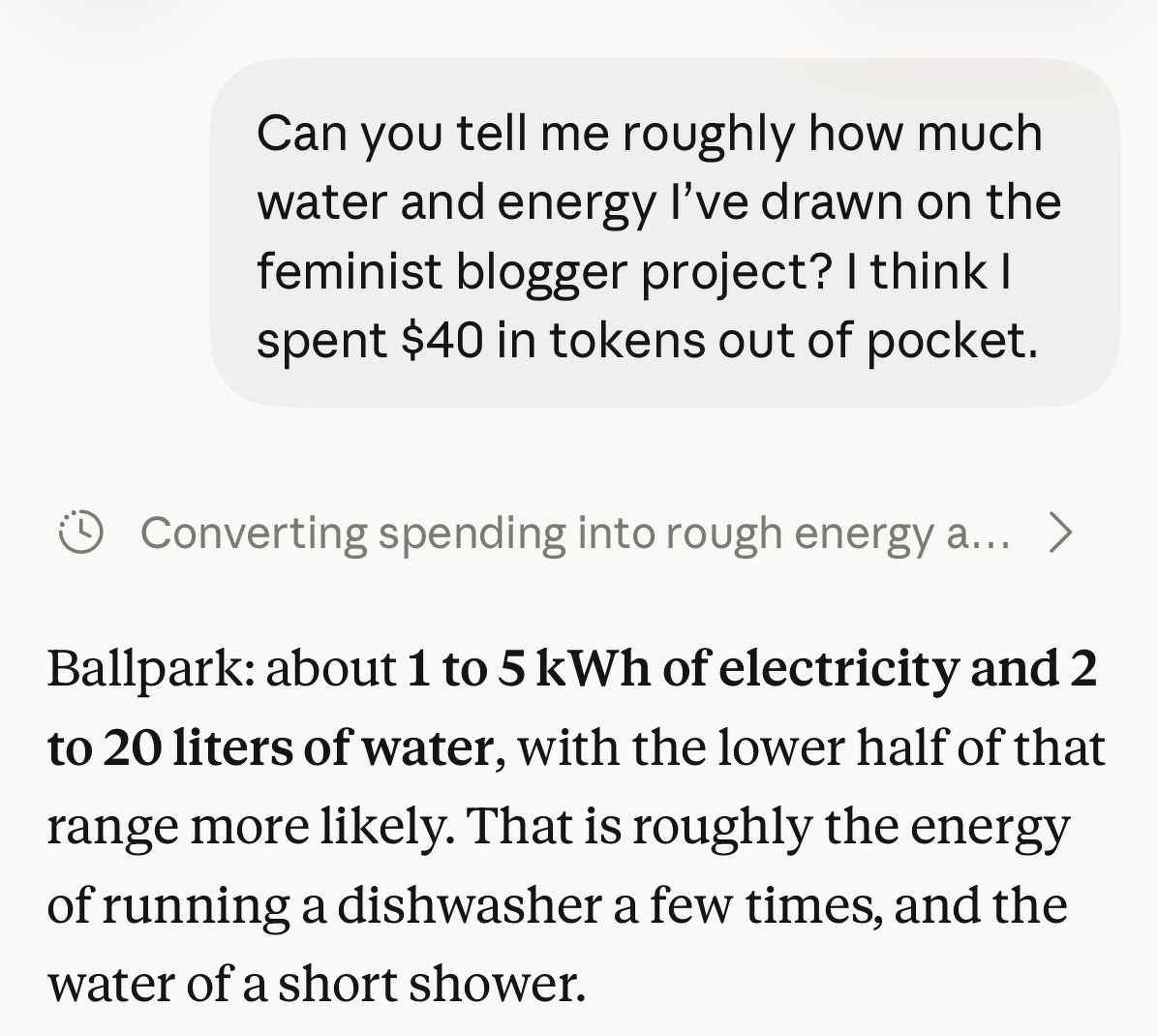
Access to tech: Enterprise level. Claude Pro plus added tokens (~$40 out of pocket after I ran through Claude Pro’s compute).
Process: Gemini pulled a roster based on the Roberts article in Jezebel. I strongly suspect my call for a “roster” shaped the inputs and outputs, making this cohort of writers look like a crew of fantasy football players or Marvel characters. All stats.
I asked Claude to analyze the data from my perspective, which includes people and details that aren’t part of the formal record, allowing for compare and contrast. To get here, I had to publish and republish the prompt almost forty times to better anonymize the data while protecting the writers included.
The “thickness” heuristic applied is totally made up - Claude took my thoughts about Donna Haraway and McMillan Cottom’s work and wove them through my thoughts about information architecture that I first learned from Dr. B.
Claude scanned the final draft for legal and privacy concerns. Everything here is publicly available online today, because it is currently live or lives somewhere as a ghost in the machine, whether via Wikipedia or the Wayback Machine or otherwise.
Blog note: Because of how my blog is set up to automagically find Wayback links for old URLs, if I publish my reference list, it would open a social and informational can of worms. So the (extensive) reference list will continue to live on the Claude report rather than being indexed into my link library.
I gave Claude permission to look across public data, crack windows and open doors, and to annotate and proceed as it worked, rather than keeping the decisions with me, then shaped the final strawman into what’s here. This took about half a day to pull together - yammering at the data within the Claude interface until it looked reasonable. Imagine having resources and a data scientist apply themselves here, with long reach and memory, with implications for trust, safety, consent and memory in every direction.
In the meantime Claude shut me down for the week (too much compute). I had to wait until this morning to ask Claude how much energy it took to run this report as I did, as a rookie and everyday practitioner.
I’m reading about trends in book and phone bans in American public schools, and reminded that reading novels was once considered an idle and immoral pasttime, just as internet use is today. This 2016 article from JSTOR goes into the history of reading books and the fear that it “enfeebled the mind.”
Rapper Afroman is going ultra viral this week as his “Lemon Pound Cake” trial plays out in the news. He captured the raid on security cameras in his home and used the footage in a series of songs, videos and merch. He ultimately did not face charges after the search, and argues (with evidence) that the police broke his door and stole $400, which provides the platform and substance for everything that followed. He argues the police shouldn’t have been there at all, and didn’t follow protocol when they were, and that as a citizen and artist he’s expressing his feelings about it in his preferred medium. Is this a winning legal strategy? Time will tell.
In the meantime he’s winning at public opinion. The trial is shaping up in the public view as a defamation vs. free speech trial, with the artist’s prolific work about this no-knock raid performed at his house, itself arguably unethical, held up as harassment by the officers who did the job. True crime, legal experts and court watcher accounts are going gangbusters providing cultural and legal analysis alongside video of court testimony. It helps that the court footage is a rich text — both hilarious and revealing.
French overlooks how smartphones and social media raised the stakes on debate and discussion, transforming campus discourse. Today’s students worry that one viral misstep (in countless directions) may define them forever.
Purdue Exponent students distributed 3,000 copies of a special “solidarity edition” newspaper in Bloomington after IU spanked their student paper for insubordinance, ending the IDS print edition and firing their director. The media landscape in Indiana is bleak, generally, after years of disinvestment, so student reporters fill a social and political gap that the free market left behind. Given those conditions, the wider community depends on student media, much like public radio, to fill the information gaps. Also, these campuses are situated in communities where it can be very socially uncomfortable to be a squeaky wheel. So. As alum, I’m proud of the Exponent for this brave and newsworthy show of heart. 💐
On “institutional neutrality,” a conservative approach to dampen political speech on college campuses.
While institutions are backing away from making position statements, news outlets are making lengthy statements of intent. This one from Madison is interesting because it also acknowledges that a portion of their audience may be intentionally avoiding news about the White House. This is a traditional trust-building strategy applied in a new way: explaining how the news outlet plans to allocate their resources in an era of “flooding the zone.”