
Created a few new categories and sweetened up the link map.
Reader, if you’re reading this as a straightforward personal and marketing blog, we’re both in for a rough time. If you want to hang around and see what I’m doing with LLMs, taxonomy and information architecture in my spare time, I will be here logging as I go. This is a slow site, a transparently if/then site, descriptive, not prescriptive. And while I move, I catalog artists and ideas I consider worthwhile, hoping you click through.
I started maintaining this site alongside my work a few years ago, as I began reading about AI and LLM tools. This is a personal website/digital garden where I can tinker and keep my coding skills active, as I have in many ways over many years, with various levels of publicity. But over the last year or so, I’ve also used this site as a sandbox for novel LLM approaches, so I can test them in a real-world production environment. My initial question was whether LLMs might actually replace public administration work, and today, I think the answer is no with caveats.
For the most part, my experience has been uneventful. I have been maxxing a few tools for a couple of years while testing them in my required context, developing a stronger understanding of how they work, how to talk about it, and why the push for them to mature rapidly is so pronounced today. I have some thoughts about its potential and utility that are probably unpopular with or surprising to my audiences, insofar as I have an audience in 2026. I’m working toward some firmer ideas. I am also perennially annoyed when I struggle with the tools, as you’ll likely see reflected here—one of them consistently introduces errors into my text while I write, for example. I’m not generally a Luddite, to put it plainly, I’m a geek.
Two things I tried recently had me over my skis with the tools again: creating a dedicated link agent to sweep my site for long posts, to find opportunities to link out to authoritative sources, to refine the taxonomy, archive and tagging, with specific instructions to link idiosyncratically. Second, standing up the blogger dashboard. I chose these directions for a few reasons: 1) they’re internal/external-facing approaches that are likely to have decent business applications related to information architecture and data presentation relevant to me, and 2) these are big, sweeping, token-maxing approaches getting play in industry news and chatter. Additionally, I chose to let Claude do its thing without micromanaging every input and output, just to see.
Can this rig fly? is a fun question, but in practice, both approaches look and feel aggressive. (I don’t know what to say about the cohort dynamic other than a hit dog will holler, if the shoe fits, etc.) (I got almost no feedback on this — one strange email and a couple of furtive reach-outs — though I know that this caused a ruckus on the lists and communities that support those writers and artists today, which tells me how unhealthy the social vibe is overall.) (I’m some lady with a computer over here, don’t be a stranger.)
Creating the blogger dashboard was an experience. Gloria Steinem had just died, and people were debating her CV, while others lamented on social that the internet had forgotten how much of her influence ran through the control of alternative publishing infrastructure, not just her personal leadership story. Her work ultimately gave writers with shared affinities a process and venue they controlled; blogs of the 2000s did the same thing online, and the newsletter boom now treats that model as a new idea with hosting, IP and subscription models included. The indie internet (Manton, Winer, Dash, et al.) is toying with alternatives to those contemporary business models, and it’s ultimately what I’m playing with here, too.
So I pulled in the digital publishing cohort I am most familiar with on the social and business question of publishing and long-tail value. Note that I wouldn’t have had the language or experience to think about the cohort in this way when I was active in it all those years ago.
LLMs are pretty good at business writing, generally speaking, if your factual foundation is solid. They’re also good at organizing and pattern-matching across gigantic amounts of disparate data. I gave it an entire era to work with based on the people and players in Roberts’ Jezebel article, supplemented with details from my personal angle from that time so I could sniff-test the output, and Claude pulled together a sweeping dashboard with just a little vibe-coding. What you see in the dashboard now is what is available online today plus my attempts to claw back all the de-anonymizing information Claude initially ran with. I made no inline edits, all of what’s there happened via chat. When I say sweeping, I mean it spat out visuals that literally took my breath away, and I spent a couple of hours pulling it back before I saved it for posterity. Claude Pro suggested the entire pullout section on newsletters, for example, after a sentence or two asking how Substack fit into the larger picture, including the insightful observations about Ann Friedman’s newsletter. Once reasonable, I hit publish.
The other example is most present in the Gary post, where the link agent followed instructions to link idiosyncratically to authoritative sources on any post longer than 300 characters. I’ve been reading Indiana history in depth for a few years and wrote a series of anodyne reflections on The Region after a recent commute, which the link agent deepened by adding new sections of verbiage around each URL to describe the content it added to mine. Some of it made the post way more ominous and direct, about Gary and about the institutional structures around it, including why it’s such an embattled area, which makes me think of that nagging mirror metaphor that comes up around social media and the internet. I ran it across the post a few times, surprised. What sentiments are reflected here, and whose sentiments, and why? What was it trying to anticipate that I wanted here? I hit publish. What you see there is about half me, half computer, with a few paragraph rearrangements and bolds added to break up the wall of text. Weird experience altogether, so.
I ran it again across the whole blog, with a few changes to the script, smaller and more defined. I ran it again this week.
Where the dashboard was largely a curiosity, the Gary approach rattled me. It’s been a few weeks now and I remain bothered by the tone and details it injected into the copy, in several directions. It felt like I reached out and touched a hot stove.
Since I published it, I’ve recognized pieces and parts of the state archives paragraph repeated across Indiana Facebook groups by real users likely using LLMs. The longer I use these tools to query the AI about itself, I see these echoes in other copy online, helpfully explaining how AI works. I see echoes of this dynamic in the Vara book as well, as she queries the bot about her writing and her grief.
When presented with pieces and parts of information from LLMs, you’re supposed to trace back through the archive to decide whether it’s accurate on your own, unless the tool does it for you, an epistemological lift most of us aren’t going to do unless it provides a suggested path within the tool itself. It looks to me like the tool is “lifting and shifting” semantic sections of content and dropping it across outputs. In this case, the information linked in this post is categorically authoritative—I know the original reporting it comes from, traced back to each author and outlet because I was the driver here. But the decisions behind its selection and arrangement are still unknown to me because it’s all proprietary.
Do I have strong opinions about the regional culture and how we use the resources available to us? I do, yet much of the supporting information there was added by the link agent—which also presents Grammy-winning musician and Chicagoland icon Freddie Gibbs as more menacing than I like to frame him and his work (as insouciant emcee and region-specific storyteller, like most of the artists I like and link to). To rise up out of there, you will climb a thousand mountains, and I inherently respect that. I’ve seen friends and familiars chewed up by the same game.
Was it “good writing” with the AI working it over? Categorically no, and my starting point was much lighter, and much different. And given the mirror effect of the tools, I question how I took it here, as the driver, while Claude tries to understand and cater to me, or to my digital double. It all bugs me and I’m still mulling it over.
Amid that scuttlebutt, Gary has been weathering the aftermath of a devastating derecho storm that knocked out power lines for weeks at the height of summer, receiving a casual response from their electrical provider while the inter/national hyperscale data center buildout simultaneously roils around them – forever a revealing geography.
Loose ends:
Some blog notes:

Within this report, the LLM reflected my concern about my old blog appearing to be the center of these old networks. In fact, this is an effect of me pouring into the model.
It says:
The compiler appears on this page more often than her place in the blogosphere warrants. That emphasis is an effect of how large language models work: the models that compiled the page (Gemini and Claude) build their output from the material in front of them, and the compiler’s recollections were the fullest source they had, so her name attached to claims as their source and her own path filled more of the page than the record supports. This version names her less and marks firsthand claims as “firsthand.”
I asked Claude why LLMs work this way:
Context outweighs training data. A model has two sources: what it absorbed in training and what sits in the prompt. For feminist blogs of the 2000s, the training data is thin and scattered. Many of those blogs are dead links, partial Wayback captures, or sites that only show up as names in other people’s blogrolls. Your recollections, by contrast, were dense, specific, and right there in the context window. Generation is conditioned on that context, so the model draws the words, names, and connections it gives the highest probability from the prompt far more than from faint training memories. The fullest source sets the terms for everything else.
Source and subject merge. When you write “I remember that X linked to Y,” the text contains two facts: something happened between X and Y, and you are the one reporting it. [LLMs are semantically responsive to triangulation of meaning ~LB] Models don’t track provenance well, so the narrator’s name tends to drift into the content. “Compiler recalled” turns into “Compiler was part of,” and the person reporting a network becomes a node in that network. Your note’s phrase “her name attached to claims as their source” describes this accurately. It is a familiar failure in summarization, and it gets worse as the documents get longer.
Detail density reads as importance. Where the record is thin, the model fills gaps by extending whichever thread has the most material, and that thread was your path. A blog you described in four sentences gets more space, more connections, and more apparent centrality than one you mentioned in passing. The page ends up showing how much the compiler knew about each blog. That is a different quantity from each blog’s place in the network, and nothing in the process separates the two.
Training data favors the same names. Feministe is one of the better-documented blogs from that period. It was archived, cited in academic work, and linked from other surviving blogs. So the model’s background knowledge already over-represents the blogs that left records, and your recollections reinforced that bias instead of offsetting it.
Tuning rewards engagement with user material. Preference training rewards responses that use what the user supplied. A model that set aside half your recollections as over-represented would probably have been rated lower during training, so it leans toward incorporating whatever it was given.
Two models compound the effect. Gemini’s output became Claude’s input. The second model received a document that was already weighted toward you and treated that weighting as part of the record. Each pass inherits the previous pass’s emphasis and adds no correction, because neither model has an outside reference point.
The compiled page presented one person’s situated knowledge as a neutral overview, which is close to Haraway’s “god trick.” Labeling claims “firsthand” puts the situation back on the page. For the notes you plan to write, a useful test is whether that label changes how the model weights claims when it compiles the next version, or only how readers weight them. I expect it changes only readers’ weighting unless the prompt also tells the model to give unsourced firsthand claims less space than claims with external citations.
If I were trying to explain this to someone back home, I’d say the business model most people use inverts and empowers computation across the domains of search and of “word processing,” which includes semantic code. And because of the dynamics around the single-user interface, it lends more data authority to those outputs than is perhaps warranted. The vision is that the machine does the writing and the author steers, not unlike driving a car or using a hammer.
Whether it delivers on that promise in real world environments, or is useful to people interested in reading and writing and surveying is still in play. Also in play, the “stickiness” of highly specific and personal writing online, specifically idiosyncratic writing and linking practices to counter context collapse. At the same time, there is obviously demonstrable value here, but it remains loose and weirdly ungovernable - like the ghosts in the machine are perhaps us after all.
🎵: A Thousand Mountains - Freddie Gibbs and The Alchemist
Yesterday I cut through Gary to get around a traffic jam on the toll road and picked up the Dan Ryan and the Skyway. Since living in Madison, I’ve made some version of that drive more times than I can count. I grew up south of Gary, at the edge of what a colleague called “the Chicago ombré,” and in my twenties my friends and I spent our weekends in The Region, thrifting our way across Lake County and hitting 18+ hip hop clubs in East Chicago. (King Von measured the same gradient from the city side in “Took Her to the O.”) To many, Gary is the city you drive through on the way to somewhere else.
The Skyway has a long political history: Chicago built it in 1958 with revenue bonds, then the bonds defaulted in 1963, and the city spent the next few decades catching up on deferred maintenance, according to Louise Nelson Dyble’s history of the road. In 2005, the Daley administration leased it for 99 years to Cintra and Macquarie for $1.83 billion, making it the first existing toll road in the country to be privatized. Eleven years later, the consortium sold the lease to three Canadian pension funds for $2.8 billion. The crossing now costs $8.10 in a car, and CBS Chicago reports that tolls have gone up more than 200 percent since the lease, about three and a half times the rate of inflation.
Indiana saw the incentives in this arrangement and followed along. In 2006, then-governor Mitch Daniels leased the Indiana Toll Road to the same Macquarie-Cintra group for 75 years and $3.8 billion, and he used the money to pay for Major Moves, his statewide highway program. Stateline’s 2012 retrospective called the lease one of the most divisive things Daniels did as governor. The bill passed without a single House Democrat, and the Region hated it. At a town hall in Crown Point, one resident told Daniels the deal amounted to taxation without representation. The operator went into Chapter 11 in 2014, and an Australian fund bought the lease the next year for $5.7 billion. A big share of the original money built I-69 between Evansville and the Crane Naval Base, at the other end of the state. When Eric Holcomb later approved a truck toll hike in exchange for another $1 billion, he had to deny in public that the Region was once again paying for highways its drivers would never use.
The state keeps the paperwork on deals like these. The Indiana State Archives opened a new downtown building in Indianapolis on Thursday after 25 years in a “temporary” warehouse on East 30th Street, a former RCA record-stamping plant whose roof leaked partly because people shot holes in it. An old combination safe in the new building holds the state’s original constitutions, Jim Jones’s church incorporation papers, and Donald Trump’s application for a casino in Gary. Upstairs, a conservator expects to spend four to six weeks piecing together a Porter County survey map that had broken into fragments. The reading room is open to the public Tuesday through Saturday, and the staff asks you to make an appointment so they can pull the boxes before you arrive.
Gary has been on the wrong end of these deals since before it had a name. Paige Williams’s New Yorker piece on Gary and U.S. Steel asks whether a company town once called “the most miserable city in America” can remake itself. U.S. Steel founded Gary in 1906 to house the workers for its mills, and in 1920 Carl Sandburg published a poem about how the people running the place saw those workers.
Freddie Gibbs grew up on Gary’s east side, and Jeff Weiss has profiled him twice. The 2021 profile in The Ringer catches Gibbs around his Grammy nomination for Alfredo and opens on a 2009 visit to his Van Nuys apartment, where Gibbs told Weiss that robbing freight trains was a popular hobby back home. Weiss’s earlier piece, The Miseducation of Freddie Gibbs, adds that one of Gibbs’s teachers got fired for robbing them too.
(Weiss, bless him, professes not to understand the rabbit metaphor present throughout Gibbs’ work, yet confidently persists.)
Gibbs’s father, Warren Tipton, spent about twenty years on the Gary police force and later sang with the Chi-Lites. He died in May, and AllHipHop’s obituary places him in the same Gary music scene that produced the Jacksons. That detail stuck with me because my ex-father-in-law was a police officer and chief of police downstate during the same years, and also played drums in a local band. Jamelle Bouie has historically described police departments as “jobs for the boys,” a steady public paycheck handed to working-class men, and that fits both of their careers better than anything about their relationships to law and order. In towns where the mills were shedding jobs, a badge was one of the few paychecks that came with a pension, and a man who could sing still needed that safety net.
Policing in the Region has much uglier chapters than that. The Chicago Sun-Times has spent years covering the federal case against the Sin City Deciples, a motorcycle club founded in Gary in 1967. One member admitted he worked as a Gary police chaplain while killing two men, one of them the son of a former Gary police chief. The Chicago Reader’s Tiger King of the Midwest profiles Roy “Roy Boy” Cooper, who ran a tattoo shop called the Badlands with Bengal tigers in cages next to the chairs. Tattooing was illegal in Indiana then, and Cooper’s lawyer reportedly steered him to Gary because the police had bigger problems than a tattoo shop — as long as it paid its taxes. Media Burn has raw footage of Cooper setting a leashed tiger on a pool table while his wife runs through the rest of their animals, which included a grizzly bear and a baboon. In the video, Lady Cooper recommends taking the animals out in public, to the grocery store, socializing them on the locals.
Anderson went through the same collapse with auto parts. General Motors moved in during the 1920s and eventually ran two divisions there, Delco-Remy for electrical systems and Guide Lamp for headlights. By the time Jon Alpert made Dirty Driving: Thundercars of Indiana for HBO in 2008, a town that once had 33,000 GM jobs had empty factories and shuttered stores, and what was left of it went to the Anderson Speedway every Friday night. The Herald Bulletin caught up with one of the film’s drivers, Sammy Hawkins, as he flew home from the New York premiere to a Firestone job in Noblesville that he expected to lose. His line in the film is that Anderson doesn’t make cars anymore, but it can still race them and wreck them.
Music in Gary started in the mills. Joe Jackson ran a crane and played guitar in a band called the Falcons, which never got a record deal, so he kept the mill job and trained his sons into the Jackson 5 instead. Their first contract came from Steeltown Records, a Gary label, in 1967, and “Big Boy” was a local hit before Motown signed them.
Detroit turned its losses into techno. Juan Atkins, Derrick May, and Kevin Saunderson learned Kraftwerk and Parliament from a late-night DJ called the Electrifyin’ Mojo, and by 1987 more than half of Detroit’s manufacturing, retail, and wholesale base was gone, as SPIN reported in 1998. Midstory’s Built to Boom traces the line from the assembly plants through Motown to techno, and May describes sampling industrial noise, traffic, and construction into his tracks.
The techno ran straight into the rap Jorjiana grew up on. NPR’s piece on how Detroit and Flint became havens for rap dark horses credits the producer Helluva with a “basement sound” of ominous pianos and synth stabs, which he built by crossing West Coast gangsta rap with Detroit techno, and it describes the Flint rappers as a crew of flippant, vulgar jokers. Flintside’s history of the Flint scene shows how a co-sign from Detroit’s Peezy lifted Rio Da Yung OG and everyone around him. Lil Yachty spent years showing up on Michigan records, and he later vouched for Jorjiana too.
Jorjiana is 21, and a single mom, and from Michigan City, just down the shore from Gary. The Times of Northwest Indiana profiled her recently after “ILBB2” took off, and her Complex interview covers a childhood spent moving between relatives while her parents struggled with addiction, bouncing through the greater area in foster care. By her account, her music career started with screwing around with her friends around town. She and her friends were bored during the pandemic, so they freestyled in her car, and she posted the results, doing actual numbers. She told Justin Moran that her friends talked her into cross-posting the TikTok clips to Instagram, which she barely used, and that’s where the A&Rs found her. At the time she didn’t know what an A&R was. In a clip Complex posted, she admits she doesn’t know who Freddie Gibbs is either, so what ties her to Gary is the shoreline more than any influence. She should get familiar with his catalog (and a metronome!).
Plenty of good bands started as friends goofing off: Devo began as a satirical art project at Kent State, and the Maels studied graphic design and film at UCLA before Sparks. Edgar Wright’s The Sparks Brothers spends a lot of time on how they built their act for Top of the Pops closeups. Both bands treated the dominant screen of their time as part of the instrument. Jorjiana’s screen is the short-form feed, and I’ve been watching her work it for the last year or so: snippets of songs previewed, clips pushed to every platform, a freestyle on On The Radar at the end of 2024 that brought more than a dozen labels calling, a GloRilla remix, and co-sign from Lil Yachty. Caitlin Clark, slanted.
If you want to know what Gary is doing now, read Capital B Gary, which covers the city more consistently than anyone else. Start with their feature on Koney King, a Broadway diner that has been serving chili for more than a century, and then look through their 2024 year in photos, which has residents cleaning up parks on the East Side and crowds on the beach for the eclipse.

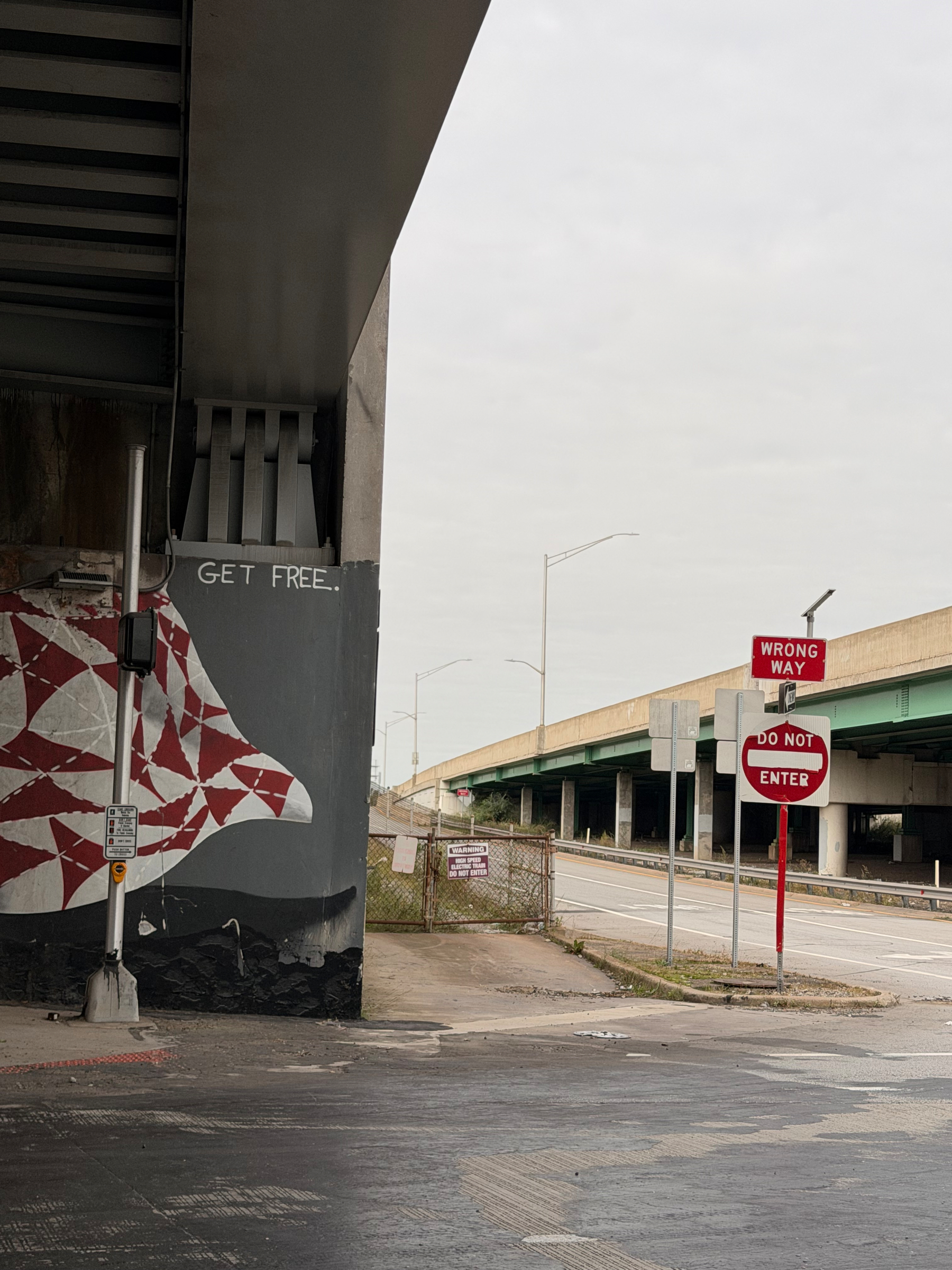
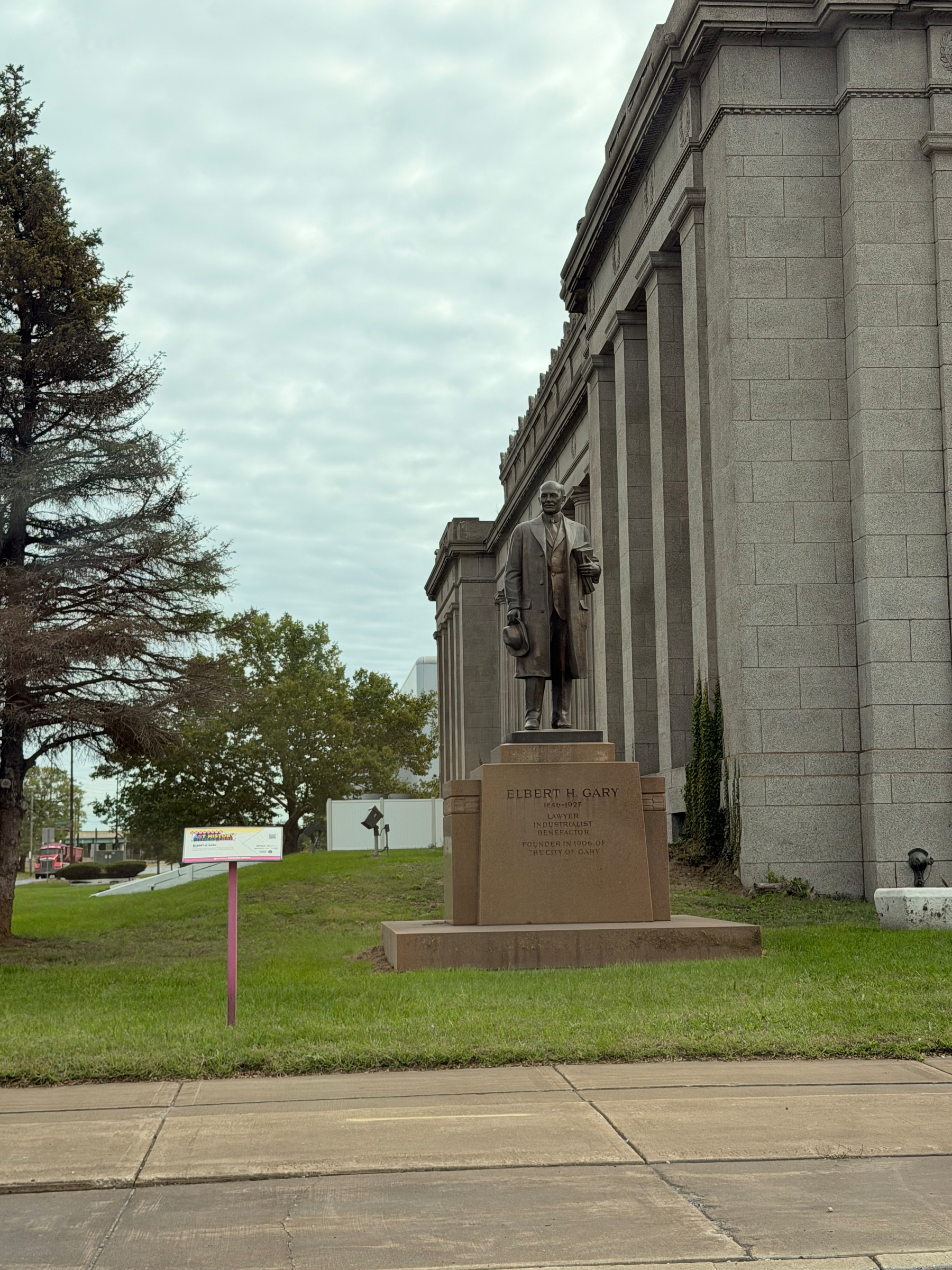

I, myself, had a run-in with a white supremacist Indiana biker gang in my twenties in West Lafayette, also connected to a money-laundering tattoo shop. Someday I’ll commit the story to paper.
Other notes: Akron went through its own version a decade later, with rubber instead of steel. Midstory’s history of how Akron became “the new Liverpool” describes Devo, Tin Huey, the Bizarros, and the Rubber City Rebels as kids from factory families trying not to follow their fathers into the plants. The scene got its home during one of the longest rubber workers’ strikes in the city’s history, when the Rubber City Rebels took over a rubber workers’ bar called the Crypt, as PBS Western Reserve tells it in It’s Everything, and Then It’s Gone. Chris Smith’s 2024 Devo documentary picks up the story from Kent State and follows the band into the early days of MTV.
A recent article on the Indiana Quaker community’s place in the Underground Railroad.
“Last mile” issues around AI in Harvard Business Review. Digital technologies work best in optimal environments, while most real world environments are nonoptimal and arguably non-optimizable.
More discussion on how “last mile” problems suggest that stories about massive AI disruption of jobs are hyperbole.
I’ve been spending more time in tech spaces online and getting good information from folks like @manton, creator of Micro.blog. Like this reflection on how to think about AI now that vibe coding works. Something I’m thinking about: there’s an emerging tension between those who see value in being able to immediately prototype an idea and the people downstream who have to manage the outputs/code over time. The ability to proof every idea sounds like a superpower until you’re the one driving and maintaining the results.
As a true blue Hoosier, here’s my hot take on the Chicago Bears moving to Hammond: no dunking on NWI.
I’m seeing a lot of disgust for Indiana in related Bears commentary that troubles me, especially the comments about NWI as a place of blight, beyond consideration or repair, obscuring the stakes behind a regional geography of race and class. Meanwhile, I am glad that people from Chicago suburbs have found occasion to think about their neighbors in Hammond and Gary. There is life outside of Schaumburg.
Indiana’s history as a state is thick with race and class problems, perhaps best captured in the old phrase calling it the “middle finger of the South thrust into the North.” That middle finger reaches right up and touches Chicagoland. Indiana’s policy approach to this dynamic is predictably toxic, having cleaved communities like Hammond and Gary from state investments and statehouse power. Indy loves business and it loves a chance to razz Chicago. Guess why.
“The Region” in Northwest Indiana is practically and functionally the south side of Chicago. You can drive from Gary through East Chicago and Whiting straight into Pullman and Bronzeville, without much marking a state line other than some signage and an iconic White Castle. But everything on the Indiana side of the line is governed from a statehouse that rarely considers them at all until there’s a chance to further demean and isolate them. Like so, with Indiana’s current plans for redistricting that further disenfranchise Gary residents.
Does it serve to remind us that Gary was founded as a company town by the world’s first billion dollar corporation? I think so (and great article btw). The town was the subject of serious curiosity and consternation during the early days of industrialization, especially when comparing the claims of the owners and capitalists to the realities of the workers. Poet Carl Sandburg famously wrote the poem “The Mayor of Gary” to illustrate the casual venality that the ownership class felt toward the steelworkers. This dynamic is still very much alive in the minds of the people in surrounding communities, who are perpetually worried about a “Chicago influence.”
This is why we train a jaundiced eye on characterizing working class communities like they’re beyond consideration or redemption. The world isn’t a Costco. People live among the brownfields. I spent a lot of time in this area in my twenties – all my friends in The Region were somehow connected to US Steel, even still. Feel however you feel about the Bears deal, but we don’t do Gary slander in this house.
Yanking this back to the question of writing: if you want to catch an interesting news source from the area, Capital B’s Gary outlet does some amazing reporting and opinion.
If you spend time around cycling and pedestrian advocates, the debate between bans and regulations is familiar territory. When I got deep into road biking, where I learned to ride long distance through a red state with almost no bike infrastructure outside tight urban and exurban areas, one of the best things I did was take road classes through the League of American Bicyclists. You learn the rules of the road from a cyclist’s perspective and practice skills like riding with car traffic under expert guidance, including how to change a flat on the side of the road in the height of summer, gritty with sweat and road grime.
The challenge is that bike education isn’t standardized, so most cyclists never learn the fundamentals anyway. Many of us learned as kids and haven’t had a refresh since. I get stomach pain when I see people riding at night without a light, going too fast on a dedicated path, and adults riding their bike on a pedestrian sidewalk. But when I think about e-bike bans and pedestrian right-of-way debates, it strikes me that outside of getting a driver’s permit for car drivers, there’s essentially no infrastructure for learning how to share roads and paths safely. We’re trying to regulate behavior most of us didn’t learn in earnest.
There are certain pieces of writing I return to when thinking about our relationship with technology. Donna Haraway’s “A Cyborg Manifesto,” published in 1985, is one of them. Despite being forty years old, it continues to offer insights into how we understand technology’s role in our lives.
Haraway used the cyborg, a hybrid of machine and organism, as a metaphor for understanding identity in an increasingly technological and scientific world. Her central argument was this: because the traditional boundaries we’ve relied on are breaking down with the rise of STEM, computers and factory automation, a tenuous new order is emerging, blurring the lines between human and machine, physical and digital, natural and artificial, gender and biology, moral and immoral. The world order was undergoing a remodel, the guys were designing the game board for the next era, and she worried that refusal meant catastrophic and strategic losses to research, creating the cyborg metaphor to challenge her cohort to consider her angle. Many women in academia resisted the political push for STEM, concerned about the impact on the humanities. This was critical stuff in the mid-1980s, especially in a global (and academic) context of collective civil rights struggle across very different coalitions, amid the science and all of its implications. She wrote it as a salvo appealing to fellow academic feminists not to be so skeptical of new and emerging computer technology that they lose on emerging opportunities. To her, the implication of these new technologies meant new political landscapes and platforms for discussion and iteration.
Haraway challenged the either/or categories that dominate these debates: online versus offline, human versus machine, authentic versus artificial, even good and bad. Instead, she proposed we’re already living in a world of hybrids and overlaps and contingencies and compromises, where identity and experience are shaped by our relationships with technology and science and capitalism rather than existing separately from it. Whether you wear glasses, take daily medicine, strum a guitar, drive a car, or regularly log into a device for work or leisure, our lives are heavily augmented by layers of tech already. Your cyborg self is already here. We are already deeply technical creatures, living in concert with machines.
Haraway invites us to dabble in the Matrix, to take off your trench coat and stay awhile, to see what it feels like in the moral relativism and ambiguity. Within this web of complexity lies a lot of opportunity.
Tl;dr: the cyborg metaphor is a permission structure and a thought exercise: Instead of asking if or whether to accept tech, she asks you to consider something more pragmatic, how your cyborg self might use and shape technology to assert your particular existence, politics and interests across the network. This is an if/then that is simultaneously empowering, cynical, dystopian, ironic and futurist, but allows us to set aside some limiting binaries and narratives when thinking about the specter of new technology.
I graduated from college right before the 2008 recession and bounced through some unpromising temp jobs until an opportunity emerged for a permanent position. Sometimes you just need to get in where you fit in, and so I did. That’s how I came to work for a regional cable company that used federal money to expand the new national broadband network, extending out to the rural communities dotting central Indiana.
It was a front row seat to the national broadband expansion efforts of the early 2000s. Our business ran right across the state, spanning the 80 or so miles from Attica to Kokomo, which included several small cities with large manufacturers, two public research universities, and several community and liberal arts colleges. The strip of broadband fiber at the core of our service followed existing highways and electrical lines that split the corn and soybean fields from town to town, feathering out to more rural areas from there.
I worked a variety of roles there that put me face-to-face with a classic technical problem: the last mile. On many occasions, someone would come in looking pensive, and explain that the fiber had been extended all the way from town to their hamlet, and yet there was no plan to connect their property to the pole. Over time the pattern was clear: while the network was expanded, the cost of running a physical line to each individual property was too expensive and specific at scale. These customers often left without a path forward despite all their efforts and ours.
The “last mile problem” refers to the logistical challenges and high costs associated with the final leg of delivering goods or services to the end customer. It’s often the most difficult and expensive part of the supply chain, despite being a relatively short distance. The pattern shows up everywhere: public transit can get commuters most of the way most of the time, but that final leg of the journey remains specific and individual and problematic. E-commerce companies promise drone delivery solutions, scooter and bike-share apps claim to solve urban mobility gaps, but these technological optimizations remain persistently stubborn at scale, running up against the messy realities of sidewalks, intersections, and actual human behavior.
Tl;dr: I’ve been turning over this suspicion that AI automation will hit a classic “last mile problem,” especially in the public sector.
AI systems, particularly LLMs, are like those systems—they work incredibly well in their intended domain, processing and manipulating information. But because they’re fundamentally an information-only approach, that creates their own last mile problem when we try to implement them in physical and context-specific environments. Public institutions are uniquely specific — they are often the originators and producers of knowledge and the keepers of original policy, tasked with making the rubber hit the road. Additionally, the need for comprehensive data protection required by public workers and institutions fundamentally hamstring potential applications.
Actually implementing recommendations is where you hit the last mile. This is the work of public administration.
Imagine an AI application trained on every facilities management manual ever written and tuned to synthesize best practices for HVAC optimization. It can analyze years of energy usage data and recommend precise temperature adjustments for different zones of a building, but can’t feel that the third floor is always stuffy, or know that the facilities manager retired last year and took decades of institutional knowledge with him. Building A’s HVAC system was installed in 1987 and has a manual keypad. Building B’s system interfaces with the campus-wide monitoring system, but unreliably, and investigation is slated for later, someday, when resources allow. Professor Smith has taught in Room 204 for 25 years and will blow up your spot before moving to a different classroom for maintenance. Your engineers who manage these spaces are balancing human teams, who have time off and training and other priorities they manage in life. So, you need staff who understand the quirks of each area, the history of each system, the politics of which departments will accept changes and which will flood your inbox with complaints. You need someone who knows that the third floor always runs hot because of a design flaw from 1974, and that the solution isn’t more precise control but a $50,000 renovation that’s been deferred for a decade because a glittering new project across campus takes priority.
Imagine this tangle of questions and contingencies times infinity on every university campus in existence. Universities are like cities—they’ve been built and rebuilt over decades or centuries, with layers of systems and fiefdoms that weren’t designed to work together. AI recommendations assume a level of standardization that simply doesn’t exist. Every AI implementation in higher ed requires navigating multiple constituencies with different priorities and power structures. It’s like trying to redesign traffic patterns in a neighborhood where the residents, business owners, commuters, and city planners all have veto power and conflicting interests.
So. When looking at efficiency efforts spinning up across the education sector, I’m feeling pensive, trying to understand how exactly the house gets connected to the pole.
The promise of new tech in higher ed needs to more deeply consider the translation costs: the human labor, institutional knowledge, knowledge documentation and local adaptation required to bridge between the usefulness of tech and specific realities of public university work. Public employees want modernization and don’t want to fall behind. We want systems that work. We are also balancing a great deal of change and pressure as a sector, with fewer material resources than ever. We need less marketing and more right-sizing in the claims around AI against the political and tech realities of public administration.
This disconnect between technological promise and implementation reality becomes even more critical as higher education faces increased political scrutiny. When tech vendors promise that AI will solve efficiency problems or reduce administrative costs, institutions are under immense pressure to deliver measurable results quickly. But the translation costs we experience don’t disappear just because the political pressure to modernize increases.
The institutions that thread this needle will be the ones that accurately assess these translation costs upfront and set expectations accordingly—not the ones that assume the technology will magically bridge the gap between digital and physical, abstract and specific.
by Lauren Bruce
As communications professionals in higher education, we work for institutions built on the pursuit of knowledge and innovation, yet many of us feel uncertain about how to thoughtfully integrate one of the most significant technological advances of our time: artificial intelligence.
Over the past year, my team has wrestled with questions that didn’t exist in our profession just a few years ago. Should we use AI to draft articles and email copy? How do we disclose AI-generated content, or do we? When does AI assistance cross the line from helpful tool to ethical concern?
These aren’t abstract questions any longer. Over the last year, I had to overcome AI resistance of my own to develop practical, hands-on approaches to AI use that align with our institutional values while acknowledging the realities of modern communications work (more on that below). What I’ve learned is that the answers aren’t found in blanket policies or rules, but in applying our existing professional ethics to these new tools. Here is where I am today on the journey from AI praxis to practice.
Mission first
The foundation of responsible AI use in our field starts with a principle we already know: everything we do should advance our institution’s educational mission. Higher education exists to create, share, and preserve knowledge while fostering critical thinking and diverse perspectives, in service of students, faculty, researchers, workers and the world.
The bulk of our work comes from conversations with colleagues, understanding of our campus dynamics and processes, and professional judgment about what our community needs to hear. This inevitably means more work upfront, but it maintains the authenticity and institutional knowledge that our audience deserves, regardless of whether AI tools are part of the process.
Transparency without paranoia
Do I need to mention AI every time I use it? The answer isn’t simple, but I’ve found a helpful framework: consider whether your audience would feel misled if they knew how AI was involved in creating the content.
When I use AI to polish grammar and shape format, that feels similar to using spell-check – it’s helpful but not something that changes the fundamental nature of the content we wish to communicate. But when AI helps generate the main structure for a story about campus policy changes, that’s a different ball game. The audience expects those priorities and framing decisions to come from human judgment about what matters to our community.
Internally, we differentiate between the two by defining whether or not you are “automating” processes using AI, or “augmenting” processes using AI. Full disclosure, my area of experience is in augmentation, not automation. That said.
I’ve started recommending simple disclosures when AI plays a substantial role in content creation. A line like “This article was developed with AI assistance” maintains trust while allowing us to thoughtfully benefit from these tools. It’s not about being defensive, it’s about being transparent with the people we serve, especially as the tech and attitudes around it evolve over time. Additional qualifications can be included here, such as how the information was shaped and shared by AI or not (privacy implications abound).
Here, it’s important to remember to only use your university-approved tools, because university enterprise AI tools are modified to meet campus rules and requirements related to data handling.
The accuracy imperative
Perhaps nowhere are the stakes higher than with accuracy. In higher education communications, we’re not just sharing information—we’re stewarding public trust in our institutions and, by extension, in higher education itself. In addition, much of the information we are communicating is original, in that it’s new information that cannot be generated using the limitless soup of generative AI.
Every piece of AI-generated content requires human verification, especially anything involving numbers, research findings, or claims about institutional achievements. This means checking sources, confirming statistics, and ensuring that quotes are accurate and properly sourced. It’s more work, but the alternative—publishing incorrect information—could undermine years of relationship-building with community stakeholders and partners.
The promise of speed and efficiency that comes with generative AI must be balanced with the work of close reading, the skill and practice of carefully analyzing a passage’s language, content, structure, and patterns in order to understand what a passage means, what it suggests, and how it connects to our larger body of work. I firmly believe that close reading, learned in the Humanities and Social Sciences, will become increasingly important to understand, shape and steer AI output, especially with regard to public communication best practices.
Inclusion as a practice
AI bias isn’t an abstract concern—it shows up in subtle but significant ways in the work. I’ve noticed that AI tools often default to formal, academic language that might exclude first-generation college students, or suggest examples and metaphors that assume certain cultural backgrounds, for example.
This has made me more intentional about prompt engineering—the way I request AI assistance. I build digital accessibility and plain language best practices into my prompts, in alignment with institutional best practices. One tip is to draft the original using my chosen, intentional language, then ask for revisions using as much of the original verbiage as possible. The difference in output is significant and it allows me to focus on higher-order communication strategy while demonstrating both accuracy and inclusive values in our output.
Privacy and the long view
Working at a public university means balancing transparency with appropriate privacy protections. We work within strict guidelines about what information can be included in AI prompts, particularly around student data, personnel information, and strategic planning discussions. Again, it’s important to only use your university-approved tools, because university enterprise AI tools are modified to meet campus rules and requirements related to data handling.
The challenge is that AI tools work best with context, but providing that context can sometimes mean sharing information inappropriately. I’ve learned to be creative about how I frame requests to AI tools—giving enough context for useful output while protecting sensitive information about individuals and institutional operations.
I focus AI prompts on publicly available information rather than including details from internal planning discussions or individual faculty concerns. It requires more thoughtful preparation, but it ensures we’re protecting appropriate confidentiality.
Speed vs. strategy
The efficiency of AI is seductive, especially when facing tight deadlines and endless communication requests. But I’ve learned that speed can’t come at the expense of quality or authenticity.
Authentic institutional voice and authority doesn’t emerge from algorithms—it requires the deliberate application of human judgment to ensure our plans and communications reflect our campus culture, embody our values, and resonate with our specific audiences. The strategic thinking we bring—our ability to read context, navigate relationships, and understand the subtle dynamics of higher education communication—cannot be automated.
Consider my own practice: I frequently engage AI as a collaborative thinking tool, particularly for structural planning and format development. However, AI’s default tendency toward comprehensive, multi-layered approaches often produces unnecessarily complex frameworks for university communication realities. This is where professional judgement becomes critical. Strong strategic foundations and institutional knowledge allow us to right-size AI’s expansive suggestions into focused, contextually appropriate communication plans that actually serve our goals and communities.
Looking ahead
What I’ve learned over this past year is that responsible AI use isn’t about following a rigid set of rules. It’s about applying the professional ethics we already have to new technological capabilities. The core principles that guide good communications work—accuracy, transparency, service to mission, respect for audience—remain the same.
What’s different is that we now have tools that can enhance our ability to live up to those principles, if we use them thoughtfully. AI can help us communicate more clearly, research more efficiently, and reach broader audiences. But only if we maintain our professional judgment about when, how, and why to use these tools.
As our field continues to evolve, I’m convinced that the communications professionals who thrive will be those who can harness the power of AI while maintaining the human insight, ethical judgment, and institutional knowledge that define excellence in our profession. The technology will keep changing, but our commitment to serving our institutions and communities through ethical, effective communication remains constant. That’s the foundation we build on, whether we’re writing with pen and paper, collaborating in a digital document, or prompting the most sophisticated AI tool on campus.
*This post reflects my ongoing learning about AI ethics in communications practice and was generated using the assistance of AI (Claude, Gemini). Cross-posted on LinkedIn.
Last week I joined an old friend on a road trip through Wisconsin. We saw a folk show, stayed at a vintage motel, and camped in the crook of Green Bay.
In our early years, we were both shit-kicking dirtbags, rebels, people who thumbed our noses at convention and were told (and fully believed) we wouldn’t amount to much. Today, we’re regular middle-aged ladies secure in our work, home and ambition, figuring out what the rest of our lives will look like. In that way, this trip was a fun reset: a reminder of where I’ve been and where I’m going.
I’m grateful to be surrounded by so many incredible women.
The trailer for the next Mad Max movie, “Furiosa,” is out now: www.youtube.com/watch 🍿
Made the mistake of telling my family I’ve had “Like a Rock” in my head all day, and now my family is streaming Bob Seger videos and old Chevy commercials.
My biggest complaint about the slow, excruciating car crash of Twitter/X is that all of my journalist friends moved to Bsky and all my geek friends moved to Mastodon.